
Origin
Origin and botanical actives.
The literature describes how chitosan is usually obtained; the patent specifications describe how Z-Chitosan is made from it with plant extracts. This page sets out both routes openly, with sources.
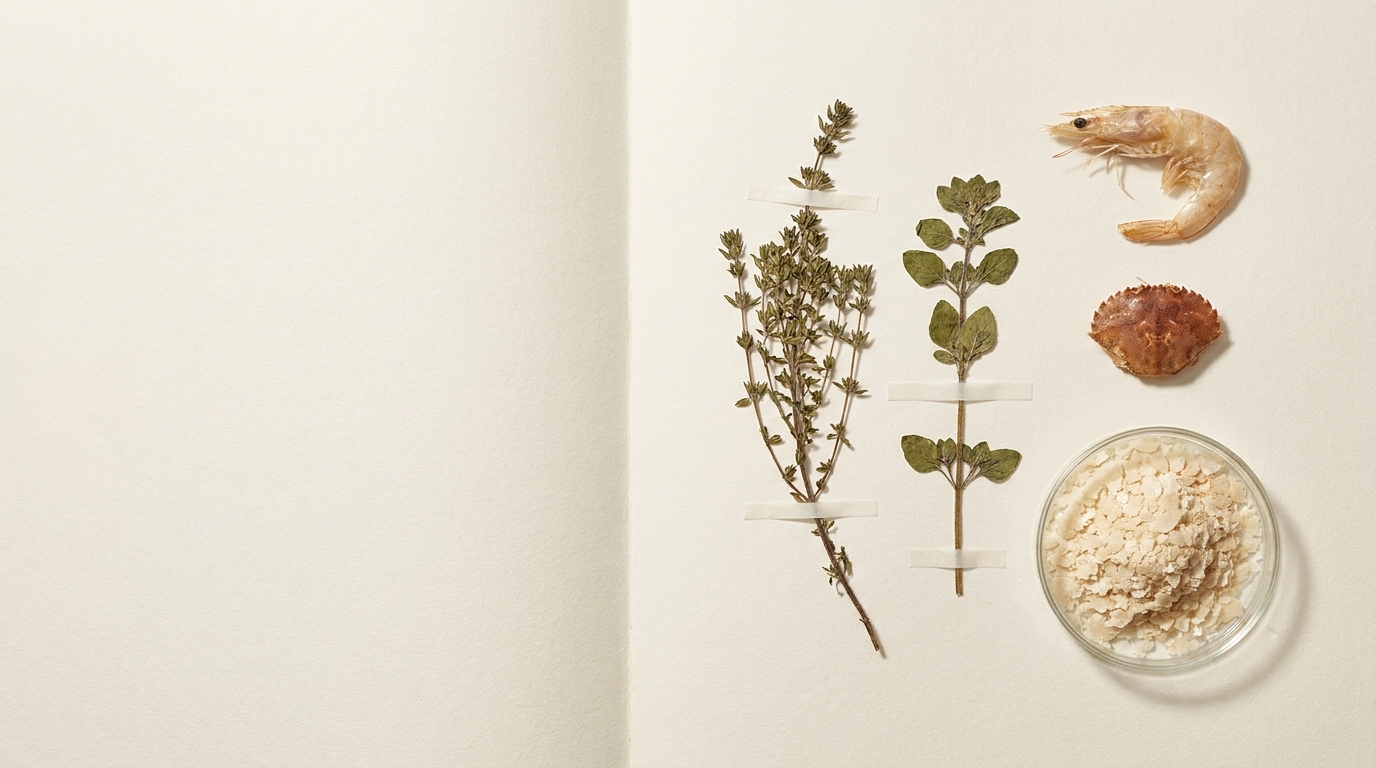
Origin Path
From raw material to Z-Chitosan in six stations.
Stations 01 to 04 show, based on the literature, how chitosan is usually obtained; the patent specifications do not name a raw material source. Stations 05 and 06 follow the patent specifications. Tap a station to see its chemistry, purpose and sustainability aspect.
01
Shells as a by-product
Chitosan is usually obtained from crustacean shells, and also from fungi. Processing shrimp and crab leaves the shells behind; they consist mainly of chitin, proteins and calcium carbonate.
Literature Yan & Chen 2015; Younes & Rinaudo 2015
- Chemistry
- Chitin (C₈H₁₃O₅N)ₙ, bound to proteins; mineral fraction CaCO₃
- Purpose
- Raw material for chitin
- Sustainability
- A residue that is often discarded is put to material use (Yan & Chen 2015).
02
Demineralisation
Dilute acid dissolves the calcium carbonate from the shells, releasing carbon dioxide.
Literature Younes & Rinaudo 2015
- Chemistry
- CaCO₃ + 2 HCl → CaCl₂ + H₂O + CO₂↑
- Purpose
- Removes the mineral fraction
- Sustainability
- Acid and wastewater are the key factors at this stage; biological methods such as fermentation are being researched (Younes & Rinaudo 2015).
03
Deproteinisation: chitin
Dilute alkali dissolves the proteins. What remains is chitin, a fibrous, off-white biopolymer.
Literature Younes & Rinaudo 2015
- Chemistry
- Chitin = poly-β-(1→4)-N-acetyl-D-glucosamine
- Purpose
- Separates the proteins from the chitin
- Sustainability
- Enzymatic deproteinisation has been described as an alternative using less alkali (Younes & Rinaudo 2015).
04
Deacetylation: chitosan
Concentrated alkali removes part of the acetyl groups. Free amino groups form, and chitin becomes chitosan.
Literature Younes & Rinaudo 2015
- Chemistry
- –NH–CO–CH₃ + OH⁻ → –NH₂ + CH₃COO⁻ · degree of deacetylation (DDA) typically 60–95 %
- Purpose
- Free amino groups make chitosan positively charged and soluble in acidic solution.
- Sustainability
- This stage requires concentrated alkali and elevated temperature (Younes & Rinaudo 2015).
05
Inclusion: Z-Chitosan
Chitosan and plant extract are emulsified separately, each with a catalyst, and then cross-linked with a further catalyst. This produces Z-Chitosan, an inclusion complex of chitosan and at least one plant extract.
Patent US 11,708,424 B1 · US 12,071,490 B2
- Chemistry
- Scheme per US 11,708,424 B1: chitosan–O⁻ + plant extract, with catalyst → inclusion complex
- Purpose
- Links chitosan, the carrier, with the plant extract
- Sustainability
- According to the patent, all three steps take place in aqueous solution at room conditions.
06
Incorporation into products
The solution is gradually dried to a powder. The powder is compounded into a polymer to make a masterbatch, which goes into plastics, polymers or fabrics.
Patent US 12,071,490 B2
Four routes into the material- Chemistry
- Physical steps: gradual drying, compounding into a masterbatch
- Purpose
- Takes Z-Chitosan into plastic, polymer or fabric
- Sustainability
- According to the patent, the masterbatch makes up 1–10 % of the plastic, polymer or fabric.
Notice
Said openly: origin and allergy.
Chitosan is usually obtained from crustacean shells, and also from fungi (Rinaudo 2006). In the EU, crustaceans are among the allergens that must be declared on food (Regulation (EU) No 1169/2011, Annex II).
Only analysis can show whether residual protein is detectable in the finished product.
Information on the raw material source of Z-Chitosan is available on request.
Botanical Atlas
Six examples from the patent.
Claim 2 of patent US 11,708,424 names more than 70 possible extracts. We show six of them here, each with the main active that the literature attributes to the plant; this is not an analysis of Z-Chitosan. Open a drawer to rotate the molecule.
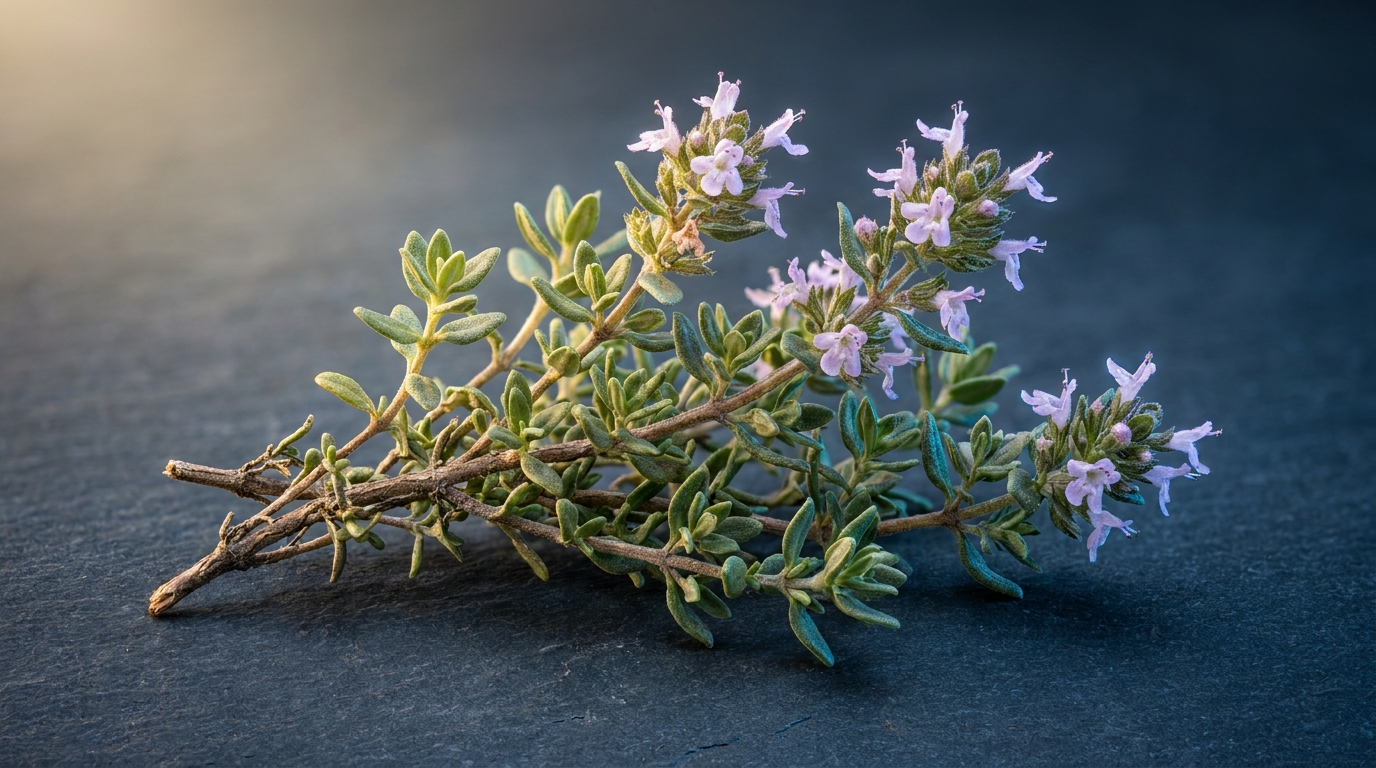
main active: thymol
Rotate molecule
Thymus vulgaris L.
Thyme · main active: thymol
Thymol is a phenolic monoterpene that characterises thyme essential oil. Its antibacterial and antifungal activity has been studied extensively.
Literature Marchese et al. 2016, Food Chemistry 210:402–414
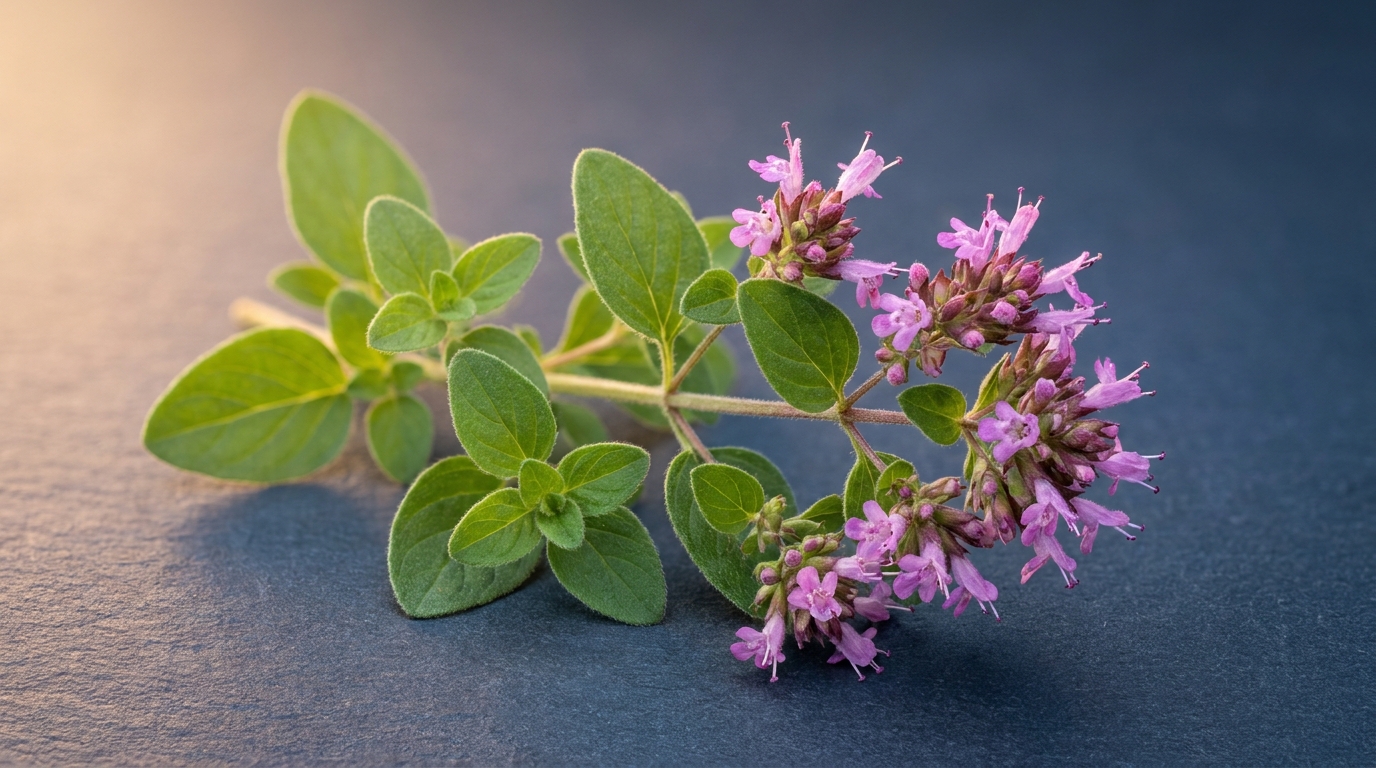
main active: carvacrol
Rotate molecule
Origanum vulgare L.
Oregano · main active: carvacrol
Carvacrol is an isomer of thymol and, depending on origin, the main constituent of oregano oil. Reviews describe antimicrobial, antioxidant and other biological activities.
Literature Leyva-López et al. 2017, Molecules 22(6):989
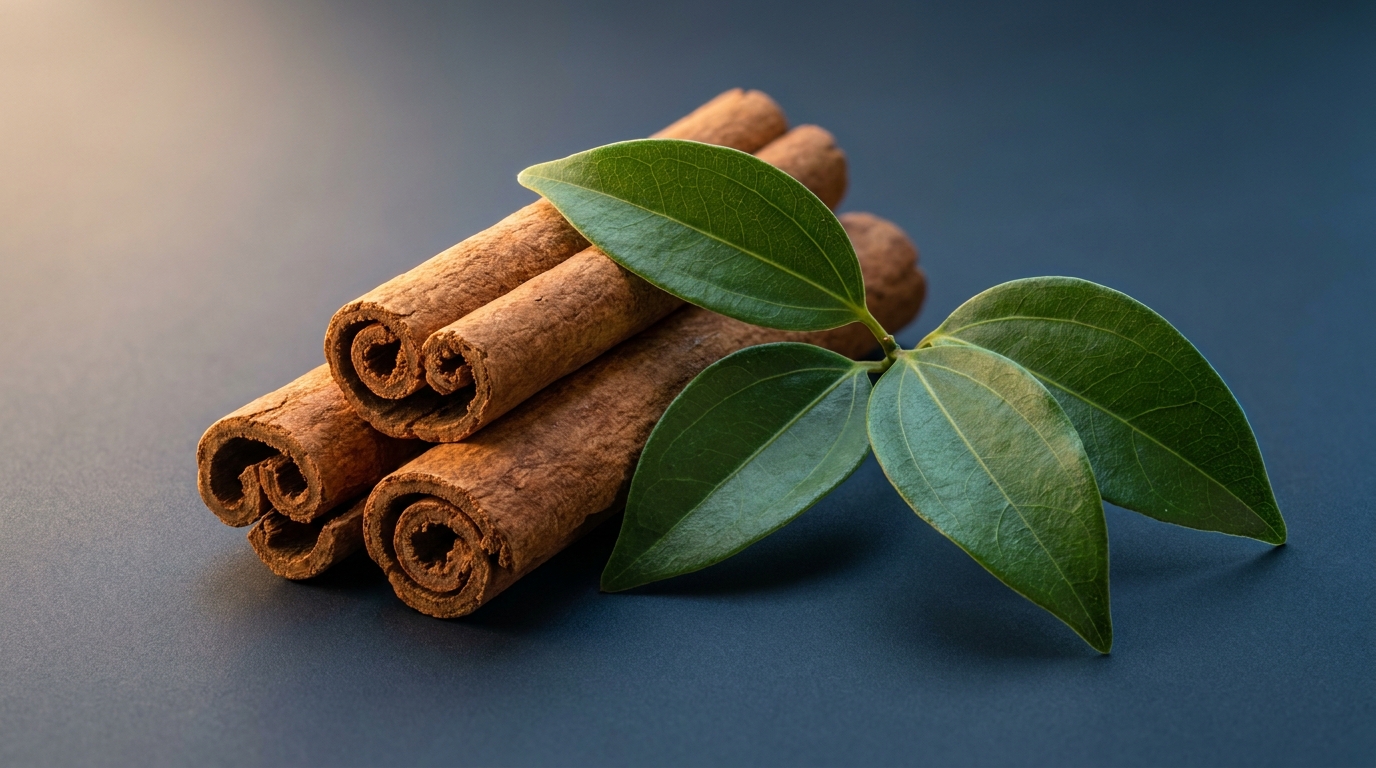
main active: cinnamaldehyde
Rotate molecule
Cinnamomum verum J. Presl
Cinnamon · main active: cinnamaldehyde
trans-Cinnamaldehyde is the main constituent of cinnamon bark oil. A review attributes cinnamon's antibacterial activity to it and describes several targets in the cell.
Literature Vasconcelos et al. 2018, Microbial Pathogenesis 120:198–203
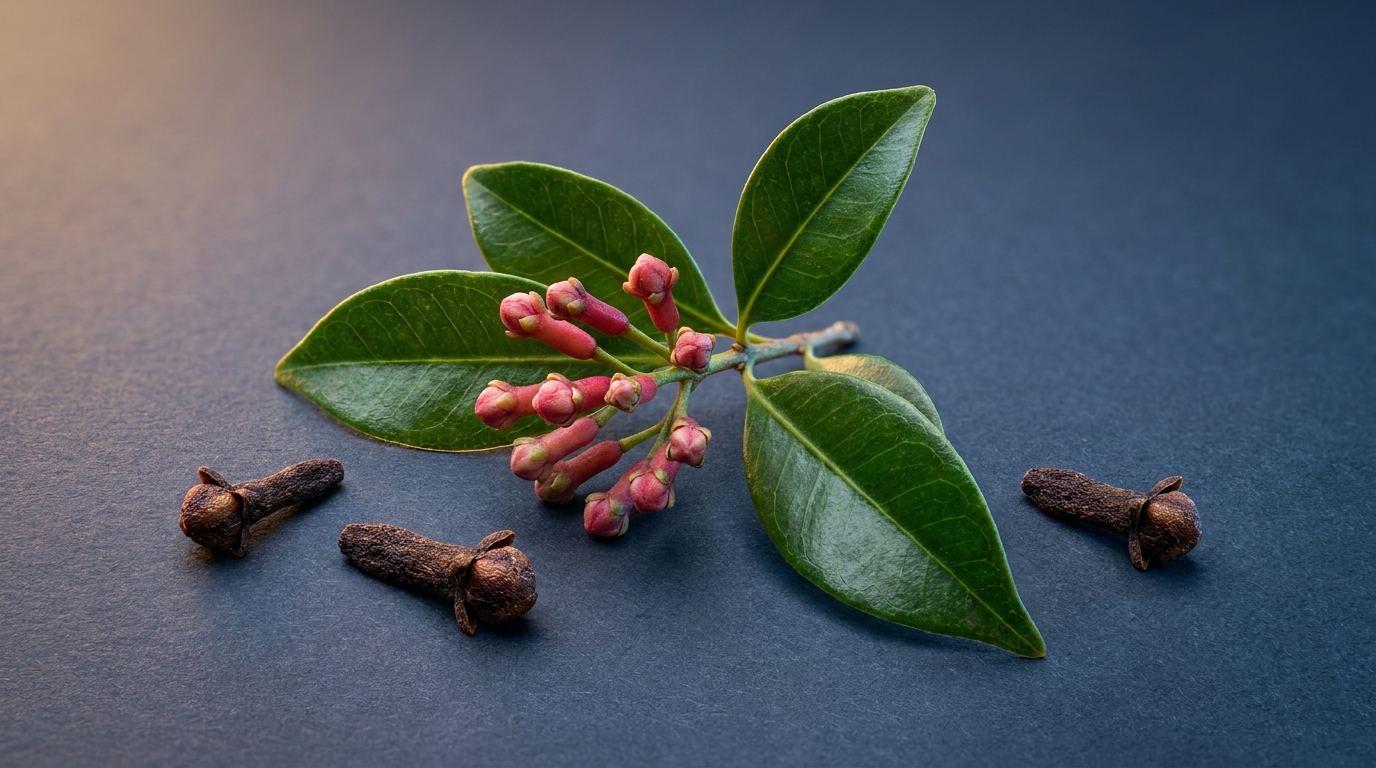
main active: eugenol
Rotate molecule
Syzygium aromaticum (L.) Merr. & L. M. Perry
Clove · main active: eugenol
Eugenol is a phenylpropanoid and the main constituent of clove oil. Its antimicrobial activity is explained mainly by effects on the cell membrane.
Literature Marchese et al. 2017, Critical Reviews in Microbiology 43(6):668–689
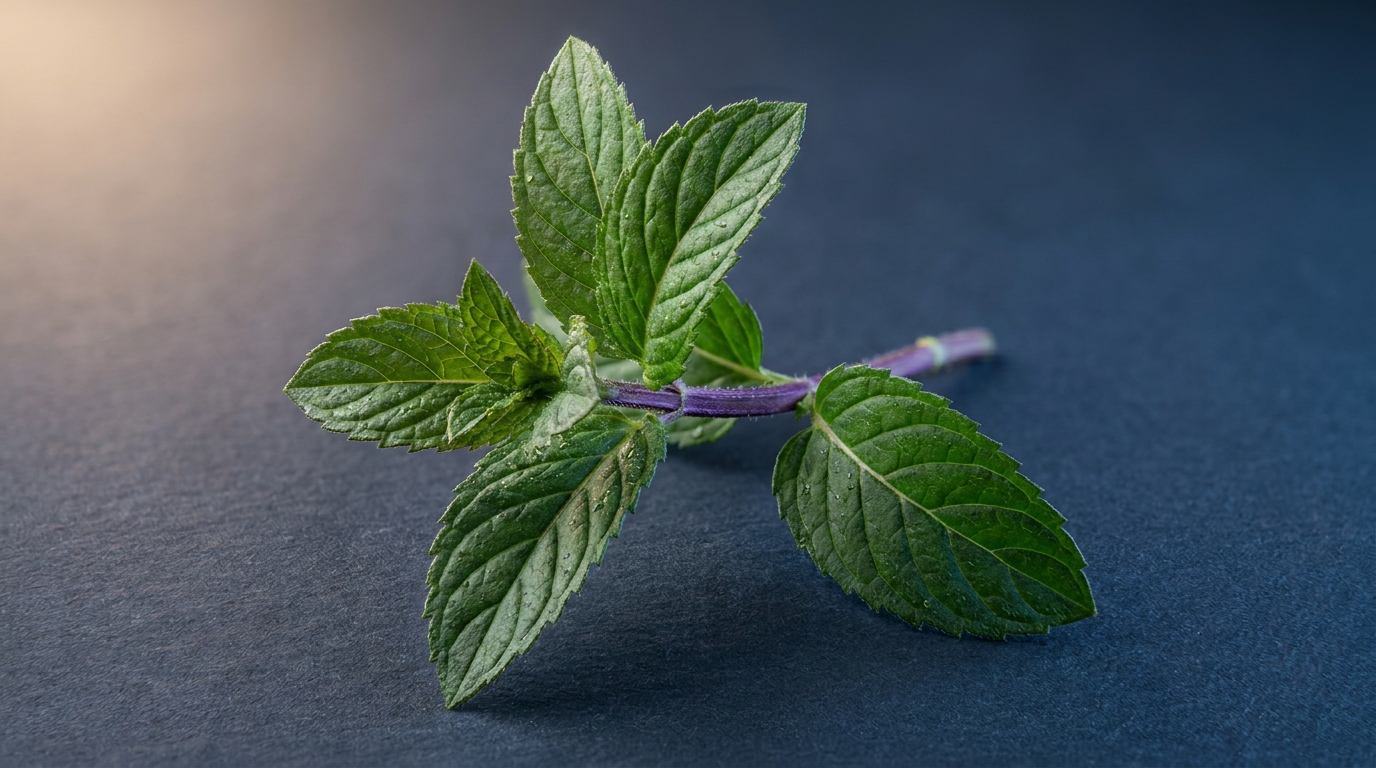
main active: menthol
Rotate molecule
Mentha × piperita L. (peppermint)
Mint · main active: menthol
Menthol is a monoterpene alcohol and the main constituent of peppermint oil. Besides its familiar cooling effect, antibacterial and antifungal properties have been described.
Literature Kamatou et al. 2013, Phytochemistry 96:15–25
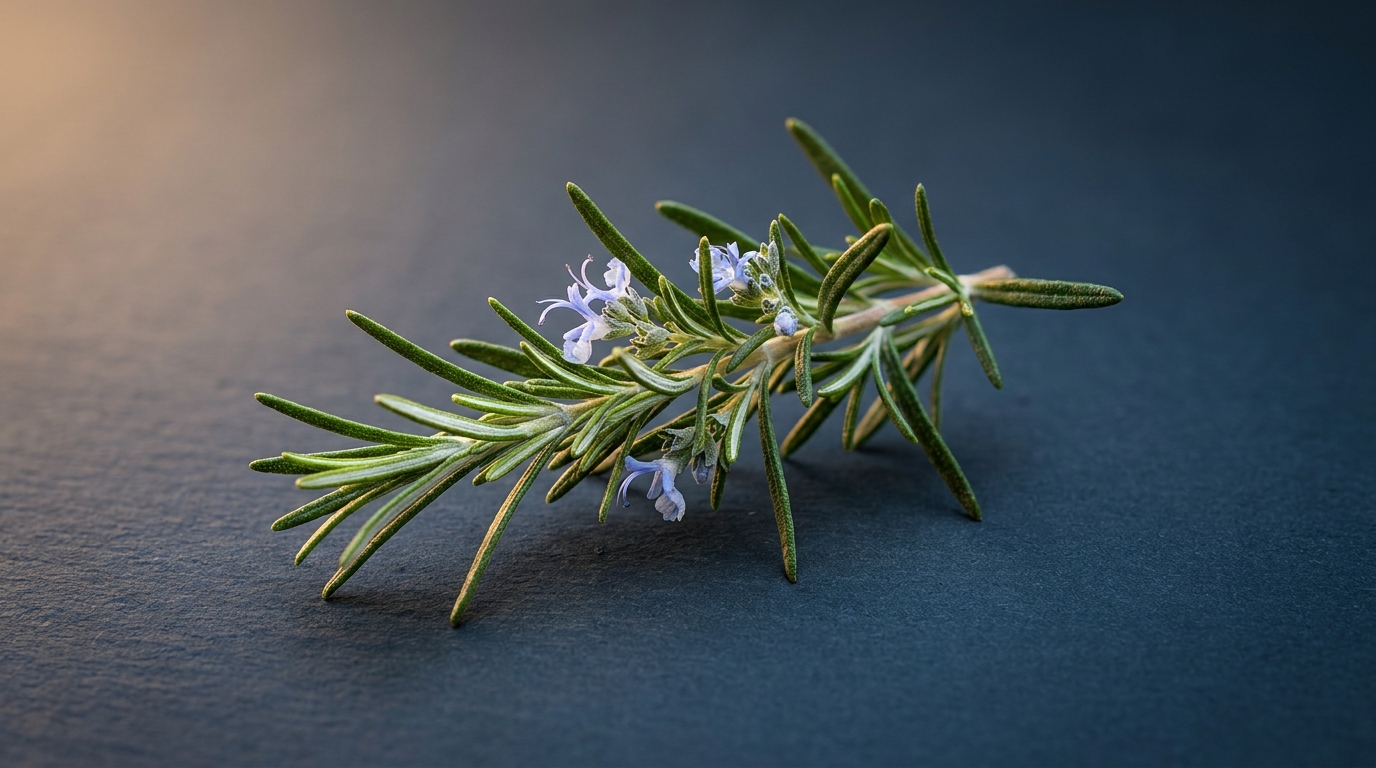
main active: 1,8-cineole
Rotate molecule
Salvia rosmarinus Spenn. (syn. Rosmarinus officinalis L.)
Rosemary · main active: 1,8-cineole
1,8-Cineole is a monoterpene ether and often the main constituent of rosemary oil, alongside camphor and α-pinene. A review summarises the antioxidant and antimicrobial properties of rosemary.
Literature Nieto et al. 2018, Medicines 5(3):98
Sources11
- Yan N., Chen X. (2015): Sustainability: Don't waste seafood waste. Nature 524(7564):155–157. doi:10.1038/524155a
- Younes I., Rinaudo M. (2015): Chitin and chitosan preparation from marine sources. Structure, properties and applications. Marine Drugs 13(3):1133–1174. doi:10.3390/md13031133
- Rinaudo M. (2006): Chitin and chitosan: Properties and applications. Progress in Polymer Science 31(7):603–632.
- Regulation (EU) No 1169/2011 on the provision of food information to consumers, Annex II (substances or products causing allergies or intolerances), No 2 Crustaceans.
- US 11,708,424 B1, claims 1 and 2; US 12,071,490 B2, claims 1, 7 and 8 and description. USPTO.
- Marchese A. et al. (2016): Antibacterial and antifungal activities of thymol: A brief review of the literature. Food Chemistry 210:402–414.
- Leyva-López N., Gutiérrez-Grijalva E. P., Vazquez-Olivo G., Heredia J. B. (2017): Essential oils of oregano: biological activity beyond their antimicrobial properties. Molecules 22(6):989. doi:10.3390/molecules22060989
- Vasconcelos N. G., Croda J., Simionatto S. (2018): Antibacterial mechanisms of cinnamon and its constituents: A review. Microbial Pathogenesis 120:198–203. doi:10.1016/j.micpath.2018.04.036
- Marchese A. et al. (2017): Antimicrobial activity of eugenol and essential oils containing eugenol: A mechanistic viewpoint. Critical Reviews in Microbiology 43(6):668–689. doi:10.1080/1040841X.2017.1295225
- Kamatou G. P. P., Vermaak I., Viljoen A. M., Lawrence B. M. (2013): Menthol: A simple monoterpene with remarkable biological properties. Phytochemistry 96:15–25. doi:10.1016/j.phytochem.2013.08.005
- Nieto G., Ros G., Castillo J. (2018): Antioxidant and antimicrobial properties of rosemary (Rosmarinus officinalis, L.): A review. Medicines 5(3):98. doi:10.3390/medicines5030098
From raw material to evidence.
The Technology page shows the literature-based model of action. Patent specifications and laboratory tests are on the Evidence page.