
Application · Water & membranes
Anti-biofouling coating for membranes.
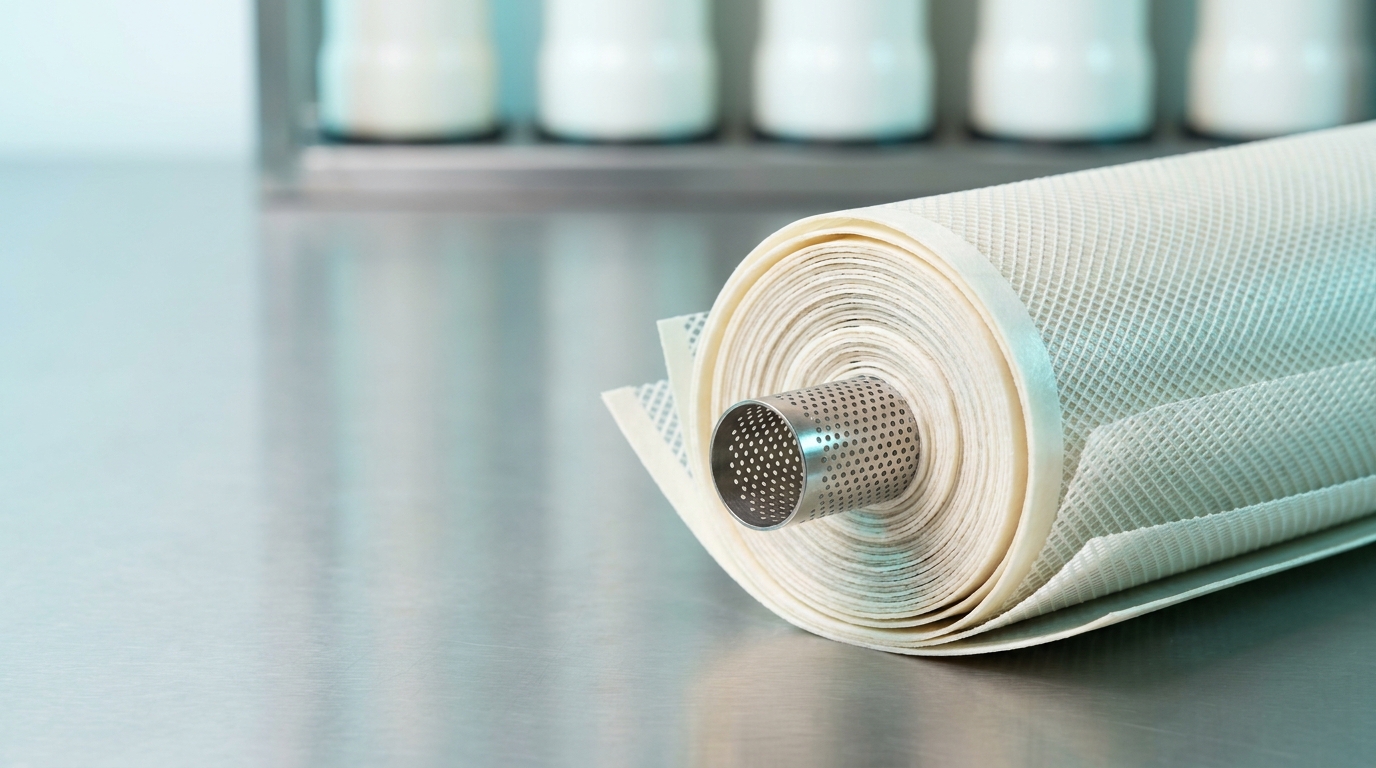
ZCP works with membrane and plant manufacturers to develop Z-Chitosan coatings for reverse osmosis, nanofiltration and ultrafiltration membranes.
Biofouling costs operating pressure, cleaning chemicals and membrane life. The coating is designed to make microbial attachment harder while keeping flux and salt rejection.
- Problem
- Biofouling on RO, NF and UF membranes and feed spacers: higher pressure, more cleaning, shorter life
- Material
- Polyamide thin-film composite membranes · UF membranes · PP feed spacers
- Incorporation
- Coating of the flat sheet or finished element · Masterbatch for plastic components
- Test data
- selected test data on request, subject to review and NDA
The problem
Biofouling slows membrane plants down.
Pressure
In reverse osmosis plants, biofouling leads to higher operating pressure, more frequent chemical cleaning and shorter membrane life (Matin et al. 2011).
Spacer
In spiral-wound elements, biofilm on the feed spacer causes most of the pressure-drop increase in the feed channel (Vrouwenvelder et al. 2009).
Chlorine
Hypochlorite alters the surface chemistry of polyamide separating layers (Kwon & Leckie 2006). Biofilms also tolerate high doses of biocides (Flemming 2002).
Literature
Surface approaches therefore act early, at the attachment of the first cells.
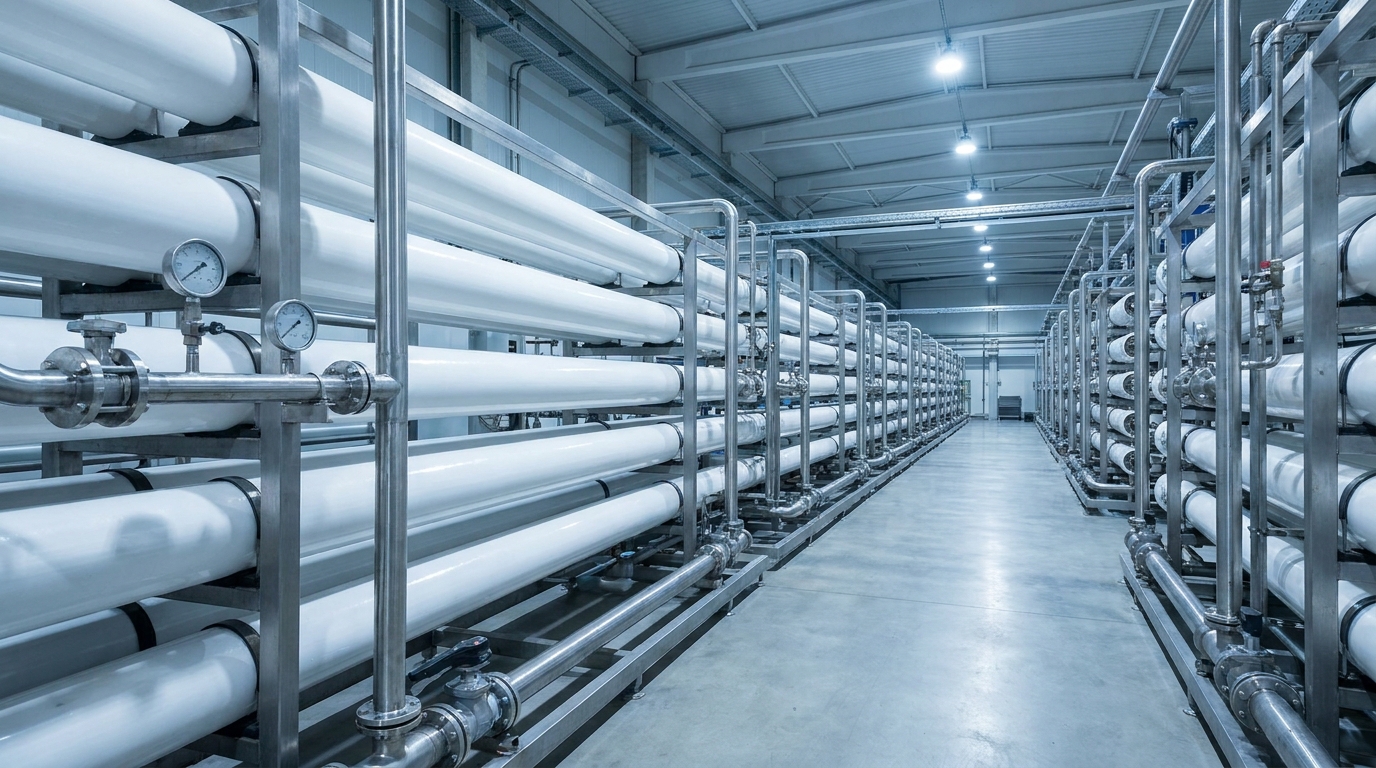
Inside the element
From the element to the separating layer.
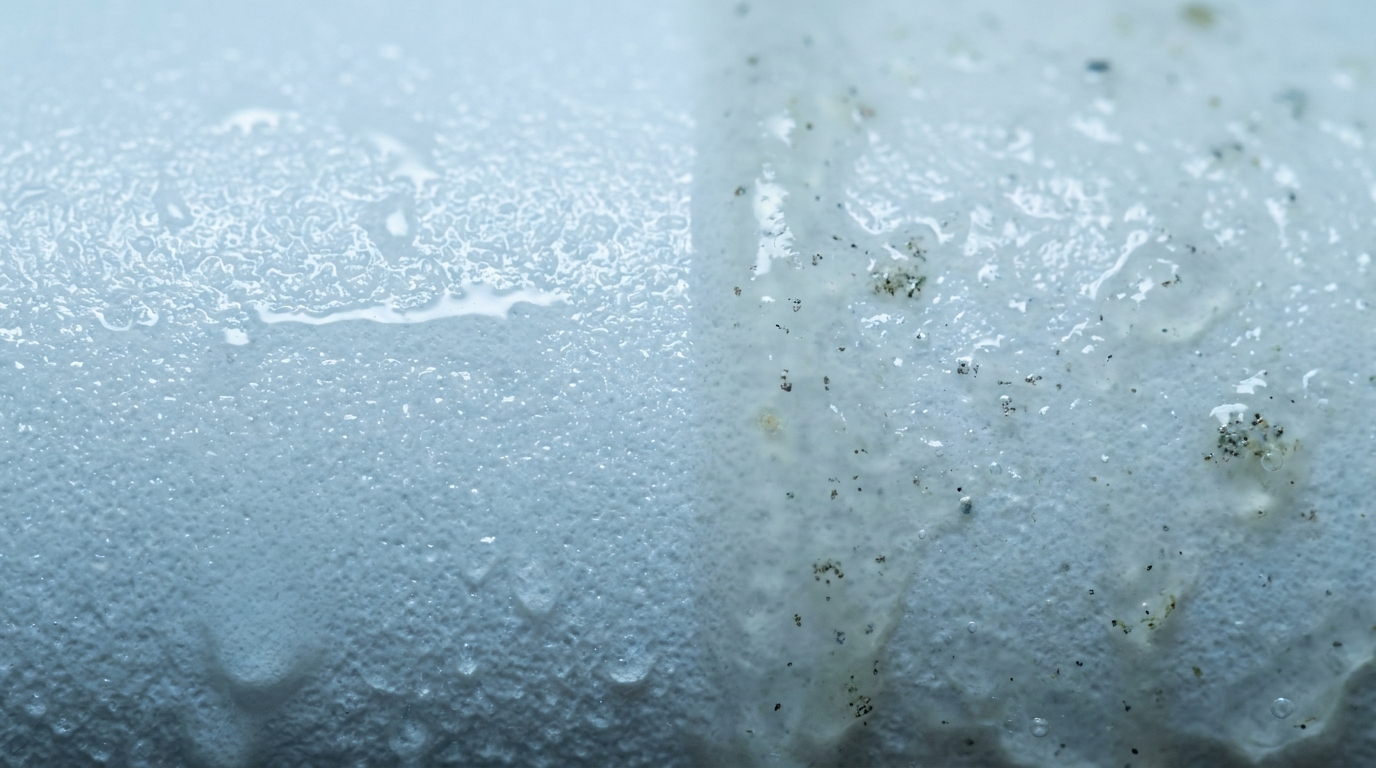
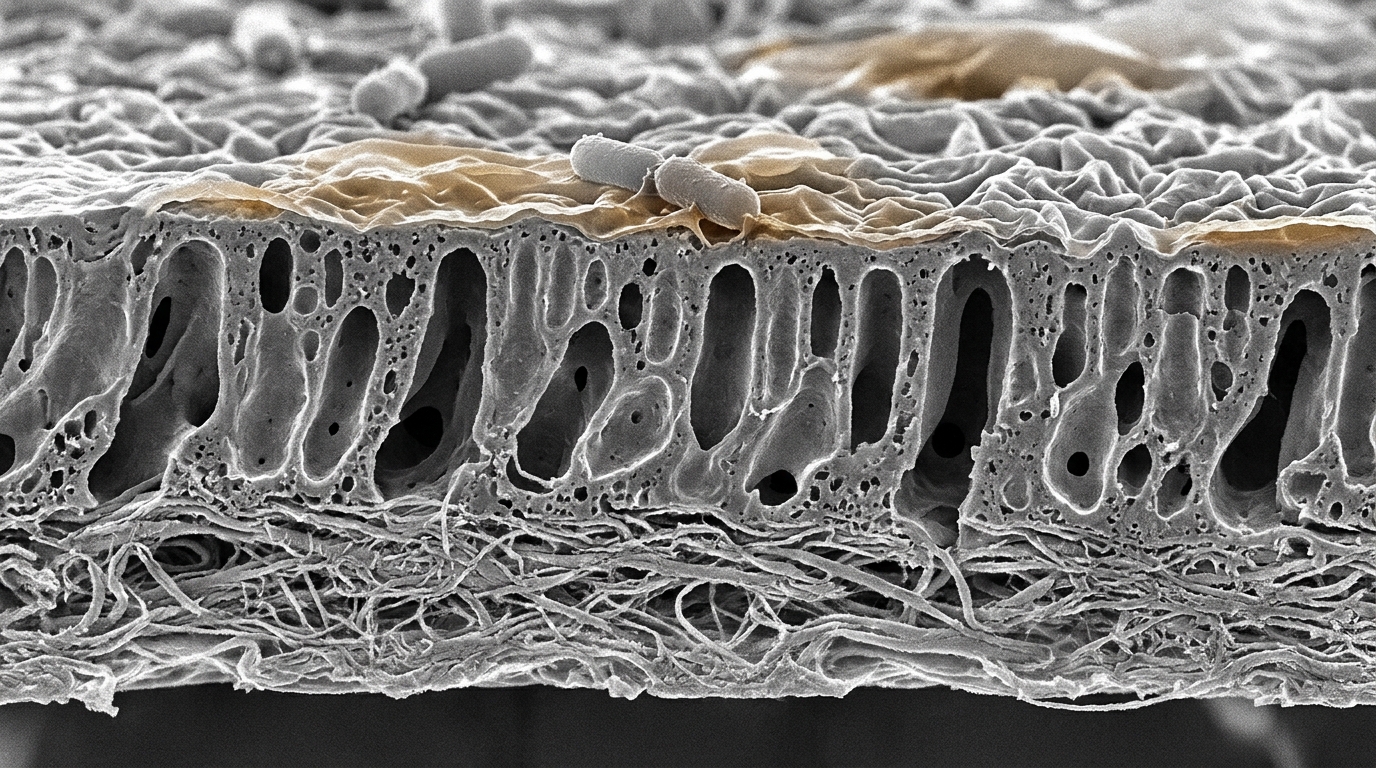
Step through the three stages: the element unrolls, followed by the surface and the cross-section.
Outer wrap
- Function
- Glass-fibre reinforced shell holding the element together.
End cap
- Function
- Anti-telescoping device; stops the layers shifting under pressure.
Membrane leaf
- Function
- Two membrane sheets around a permeate spacer, glued on three sides, open towards the permeate tube.
Feed spacer
- Function
- Diamond mesh between the leaves that keeps the feed channel open. Biofouling often starts here.
Permeate tube
- Function
- Perforated central tube that collects the permeate.
Z-Chitosan coating
- Thickness
- per membrane, set in the project
- Goal
- make microbial attachment harder
Loading model …
 1 mm
1 mm
 10 µm
10 µm
Feed → concentrate (axial) · Permeate → permeate tube (spiralling inwards)
- Polyester non-wovenapprox. 100–150 µmmechanical support
- Polysulfoneapprox. 40–50 µmporous support with finger-like voids
- Polyamideapprox. 0.1–0.2 µmseparating layer that retains dissolved salts
- Z-Chitosan coatingthickness: set in the projectaim: make microbial attachment harder
Not to scale: the polyamide layer is about a thousand times thinner than the non-woven. Values vary by manufacturer.
Flux, salt rejection, pressure drop and cleaning interval are tested in the project with the membrane manufacturer.
What am I looking at?
Step through the three stages: the element unrolls, followed by the surface and the cross-section.
- Outer wrap. Glass-fibre reinforced shell holding the element together.
- End cap. Anti-telescoping device; stops the layers shifting under pressure.
- Membrane leaf. Two membrane sheets around a permeate spacer, glued on three sides, open towards the permeate tube.
- Feed spacer. Diamond mesh between the leaves that keeps the feed channel open. Biofouling often starts here.
- Permeate spacer. Guides the permeate inside the leaf to the tube.
- Permeate tube. Perforated central tube that collects the permeate.
Incorporation
Where the coating goes.
Flat sheet
Applied from an aqueous solution to the polyamide surface before winding.
Finished element
A coating solution is flushed through the element and reaches membrane and feed spacer.
Plastic components
Feed spacers, filter cartridges and housings with masterbatch.
- Membrane types
- Reverse osmosis (RO) · Nanofiltration (NF) · Ultrafiltration (UF)
- Fields of use
- Drinking water · Process water · Seawater desalination · Food and beverage · Pharmaceuticals
Testing
Testing and classification.
Which tests a product with Z-Chitosan needs depends on the material, the use and the intended claim; we define them together in the project. To protect our intellectual property, selected supporting test data may be made available to potential partners on request, subject to review and a non-disclosure agreement.
Regulatory framework
Article 11 of the Drinking Water Directive (EU) 2020/2184 covers materials in contact with drinking water; European positive lists (Implementing Decision (EU) 2024/367) apply from 31 December 2026. A membrane with a claimed biocidal property is a treated article under Article 58 of Regulation (EU) No 528/2012.
- Drinking water Art. 11 Dir. (EU) 2020/2184
- Positive lists from 31 Dec 2026 (Impl. Dec. (EU) 2024/367)
- treated article
Classification without warranty · not legal advice · as of 26 September 2026
Classification, not legal advice. As of 26 September 2026
For your records
Partner fact sheet
- Problem
- Biofouling on RO, NF and UF membranes and feed spacers: higher pressure, more cleaning, shorter life
- Materials
- Polyamide thin-film composite membranes · UF membranes · PP feed spacers
- Incorporation
- Coating of the flat sheet or finished element · Masterbatch for plastic components
- Test data
- selected test data on request, subject to review and NDA
- Regulatory framework
- Directive (EU) 2020/2184 Art. 11 · Implementing Decision (EU) 2024/367 · BPR Art. 58
- Partnering
- Joint development with membrane and plant manufacturers · Licence after development
- Status
- Partners wanted
- Contact person
- Hadi Sultani, Managing Director · +49 176 84362604
FAQ
What membrane makers ask.
Your question isn’t here? Ask the assistant or the team.
How is the coating meant to work against biofouling?
Chitosan is positively charged in acidic conditions, while most bacterial surfaces are negatively charged. The literature describes binding to the cell envelope and disruption of the cell membrane (Rabea et al. 2003). On a membrane, the coating is meant to hinder the first cells from attaching. Flow-through trials in the project will show how well it works.
Does the coating affect flux?
Any extra layer on the separating layer can change water passage and salt rejection. So in the project we test flux and salt rejection before and after coating and during a biofouling trial. Only these data will show whether a coating pays off for your plant.
Which membrane types is the coating intended for?
It is designed for polyamide thin-film composite membranes for reverse osmosis and nanofiltration, and for ultrafiltration membranes, mainly in spiral-wound elements; other designs on request. With drinking water contact, the Drinking Water Directive (EU) 2020/2184 also applies. A short conversation about your membrane and plant type and your water quality shows which combination fits.
Sources7
- Matin A., Khan Z., Zaidi S. M. J., Boyce M. C. (2011): Biofouling in reverse osmosis membranes for seawater desalination: Phenomena and prevention. Desalination 281:1–16.
- Vrouwenvelder J. S., Graf von der Schulenburg D. A., Kruithof J. C., Johns M. L., van Loosdrecht M. C. M. (2009): Biofouling of spiral-wound nanofiltration and reverse osmosis membranes: A feed spacer problem. Water Research 43(3):583–594.
- Kwon Y.-N., Leckie J. O. (2006): Hypochlorite degradation of crosslinked polyamide membranes: I. Changes in chemical/morphological properties. Journal of Membrane Science 283(1–2):21–26.
- Flemming H.-C. (2002): Biofouling in water systems – cases, causes and countermeasures. Applied Microbiology and Biotechnology 59:629–640.
- Lejarazu-Larrañaga A., Landaburu-Aguirre J., Senán-Salinas J., Ortiz J. M., Molina S. (2022): Thin Film Composite Polyamide Reverse Osmosis Membrane Technology towards a Circular Economy. Membranes 12(9):864 (layer structure and orders of magnitude).
- Rabea E. I., Badawy M. E.-T., Stevens C. V., Smagghe G., Steurbaut W. (2003): Chitosan as antimicrobial agent: applications and mode of action. Biomacromolecules 4(6):1457–1465.
- Directive (EU) 2020/2184, Art. 11 · Commission Implementing Decision (EU) 2024/367 · Regulation (EU) No 528/2012, Art. 58.
Does Z-Chitosan suit your membrane?
Tell us the membrane type, module design and water quality. You will receive a preliminary assessment as a project brief.