
Partnering
Three ways to work with us.
From the lab to series production. You can work with ZCP in one of three models: licence, joint development, or samples and supply. The right route depends on your development capacity, your timeline and the exclusivity you need.
The three routes
Licence, joint development or supply.
Each route leads to a product with Z-Chitosan. They differ in who develops, who manufactures and which rights you receive. Routes can be combined: many projects start with samples and then move on to joint development or a licence.
 Illustrative image |  Illustrative image | 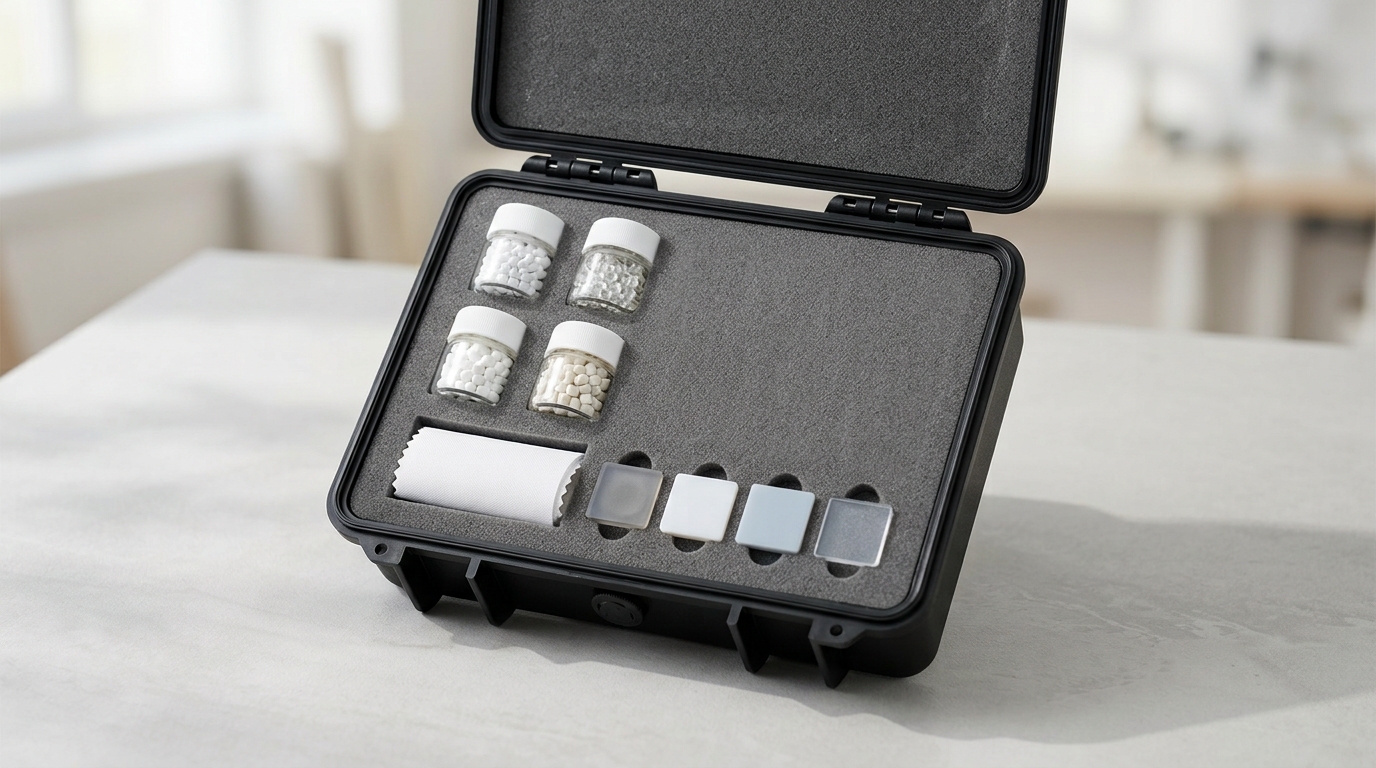 Illustrative image | |
|---|---|---|---|
| What you receive |
|
|
|
| What you contribute |
|
|
|
| Time to market | Medium to long: you build up production and testing yourself. | Medium to long: depends on phases, test scope and regulation. | Short to medium: you add to an existing product. |
| Rights | Scope, rights and exclusivity are set out in the licence agreement for each field of use and region | Foreground and background IP agreed before the project starts | No rights to the technology; use under the supply agreement |
| Typical partners | Masterbatch and compound producers, manufacturers of medical devices, textiles and paints with their own production and market access | Manufacturers planning a new product or product generation, often together with a research institute | Plastics processors, textile finishers, paint and hygiene product manufacturers with established products |
| Enquire about a licence | Discuss your project | Request samples |
Prices and terms are discussed in person.
Partnership Architect
Find your model in five settings.
Adjust five sliders. The Architect recommends a model and explains why. Use it as a starting point for the first conversation.
Licence
You manufacture yourself, using the technology and know-how in your field of use.
Joint development
We develop your product together, in phases with clear decisions.
Samples & supply
You source Z-Chitosan as an additive and process it yourself.
Adjust the sliders to see a recommendation.
How much development you can handle yourself, from formulation to testing.
A rough indication is enough.
A field of use is, for example, urinary catheters, performance textiles or wall paints.
“In-house production” means you want to produce Z-Chitosan material or masterbatch yourself.
An indication only, no figures.
What am I looking at?
The Partnership Architect maps five inputs (development capacity, time to market, exclusivity, volume, budget) to one of three models: licence, joint development, or samples and supply. The rules are listed in the table below the tool.
Process
How it works.
Five phases, four decision points. After each phase both sides decide together whether to continue, adjust or stop. This keeps the risk in each phase manageable.
Model
Phases 1 and 2 together, phases 3 to 5 at the licensee with technology transfer.
Phases 1 and 2 together, phases 3 to 5 at the licensee with technology transfer.All phases together, contract before phase 2.Phase 1 together, phases 2 to 4 at the customer with ZCP's advice, phase 5 as series supply.-
- Goal
- Establish whether Z-Chitosan fits the material, process and goal.
- Result
- Project brief, draft test plan, regulatory classification
- ZCP contributes
- Technology knowledge, initial assessment, proposed incorporation route and tests
- Partner contributes
- Product requirements, material and process data, target markets
Start, adjust or stop the lab phase
-
- Goal
- Trial incorporation at lab scale and run first tests.
- Result
- Lab samples, test results to the agreed standard, recommended variant
- ZCP contributes
- Z-Chitosan samples, formulation or coating proposal, coordination of testing
- Partner contributes
- Substrates and reference material, requirements for colour, mechanics and processing
Start, adjust or stop a pilot trial in production
-
- Goal
- Test processing under production conditions.
- Result
- Pilot parts from the production line, process window, test results on the part
- ZCP contributes
- Pilot quantities, support during trials, evaluation
- Partner contributes
- Line time, process data, quality inspection
Start, adjust or stop validation
-
- Goal
- Produce the evidence required for product and market.
- Result
- Test reports (efficacy to standard, biocompatibility or migration depending on the product), documents for conformity assessment or approval
- ZCP contributes
- Data package on Z-Chitosan; selected test data on request, subject to review and NDA; dossier support
- Partner contributes
- End-product testing, technical documentation, conformity assessment or approval
Approve market launch and scale-up
-
- Goal
- Secure series supply and quality.
- Result
- Supply or licence agreement, specification, quality agreement
- ZCP contributes
- Series supply or technology transfer, depending on the model
- Partner contributes
- Series production, labelling, market surveillance
Indicative duration per phase: see Joint development.
Public funding
Funding for joint development.
Joint development projects may qualify for public funding. Whether a programme fits depends on location, company size and partners. We look at this with you in the first meeting.
- SAB R&D project funding (Saxony)
- single projects of small and medium-sized enterprises and collaborative projects of companies and research institutes. A site in Saxony is required. ERDF/JTF funding period 2021–2027.
- Eurostars (EUREKA)
- market-oriented research and development in international consortia led by an R&D-performing SME. At least two independent partners from two Eurostars countries, maximum duration 36 months. Next deadline according to EUREKA: 4 March 2027.
- ZIM (Central Innovation Programme for SMEs)
- no new applications accepted since 7 July 2026, for a limited period.
As of 26 September 2026 · sab.sachsen.de · eurekanetwork.org · zim.de
Not funding advice. The guidelines and calls of the funding bodies apply.
Two tools to get started.
- Integration DesignerSix inputs on industry, product, material, process, goal and market. Result: a project brief with incorporation route, tests, regulations and a suitable model.
- Regulatory CompassA few questions on the purpose and use of your product. Result: the likely classification, the key legislation and typical documents.
Sources3
- Sächsische Aufbaubank: EFRE/JTF – Forschung und Entwicklung – Projektförderung (FuE-Projektförderung) 2021 bis 2027. sab.sachsen.de, retrieved 26 September 2026.
- EUREKA: Eurostars – Programme, Eligibility, Call 12. eurekanetwork.org/programmes/eurostars, retrieved 26 September 2026.
- Zentrales Innovationsprogramm Mittelstand: befristeter Antragsstopp seit 07.07.2026. zim.de; IHK Bodensee-Oberschwaben, Meldung „ZIM: Befristeter Antragsstopp seit 7. Juli 2026“, retrieved 26 September 2026.
Let's talk about your project.
In the first meeting you describe your product and goal. We assess which route fits and what makes sense next.