
Application · Medical devices
Antimicrobial coating for catheters and medical devices.
ZCP, based in Dresden, develops the Z-Chitosan coating for urinary catheters and other medical devices together with manufacturers.
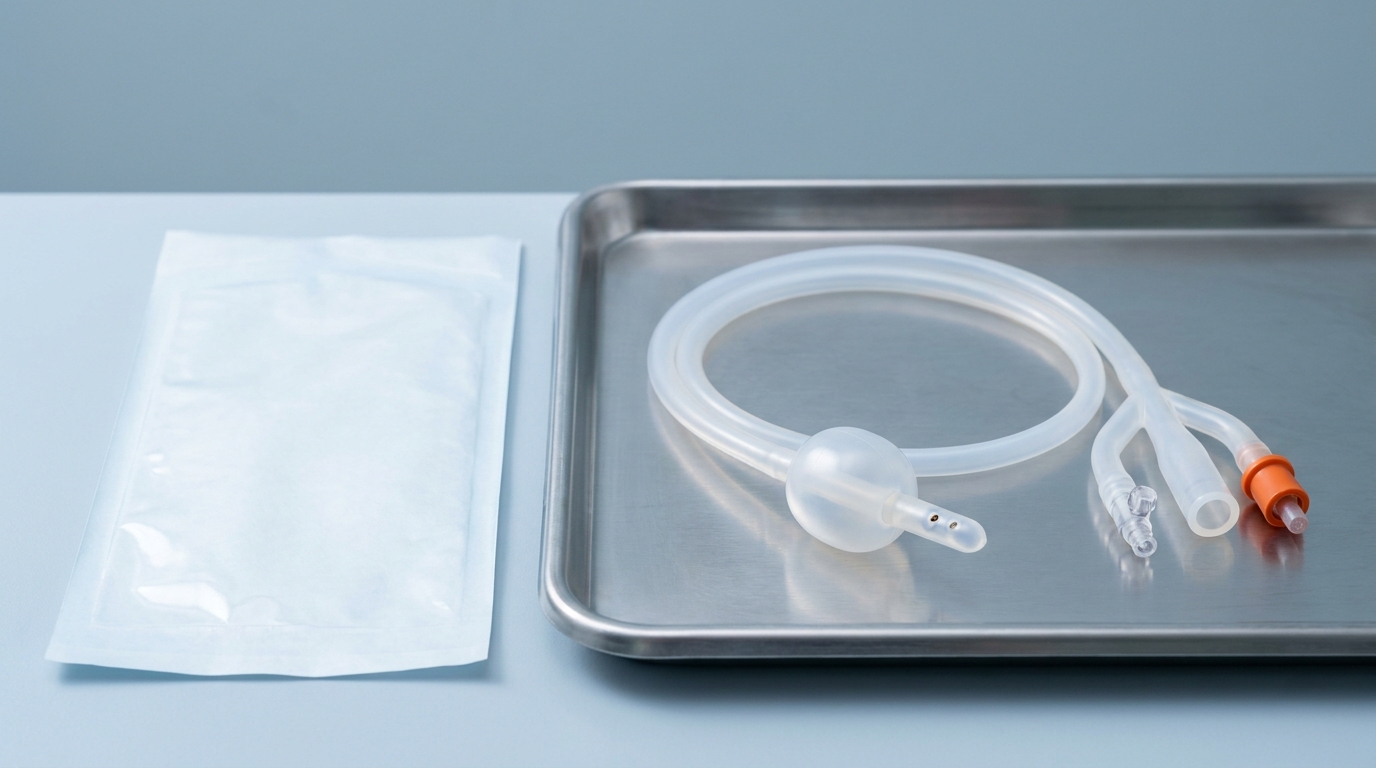
- Problem
- Biofilm and encrustation on urinary catheters
- Material
- Silicone as reference; polyurethane subject to testing
- Incorporation
- Coating of the outer surface; lumen subject to feasibility
- Test data
- selected test data on request, subject to review and NDA
The problem
Biofilm on indwelling catheters.
3–8 %
With an indwelling urinary catheter, bacteriuria occurs at a rate of 3–8% per day. Duration of catheterisation is the most important risk factor.1
Biofilm
On catheters, bacteria grow as biofilms in a gel-like polysaccharide matrix. Urease-producing species such as Proteus mirabilis form crystalline biofilms that can encrust and block the lumen.2
4.3 m
Each year, around 4.3 million patients in EU/EEA hospitals acquire at least one healthcare-associated infection. Urinary tract infections are among the most frequent types.3
Literature
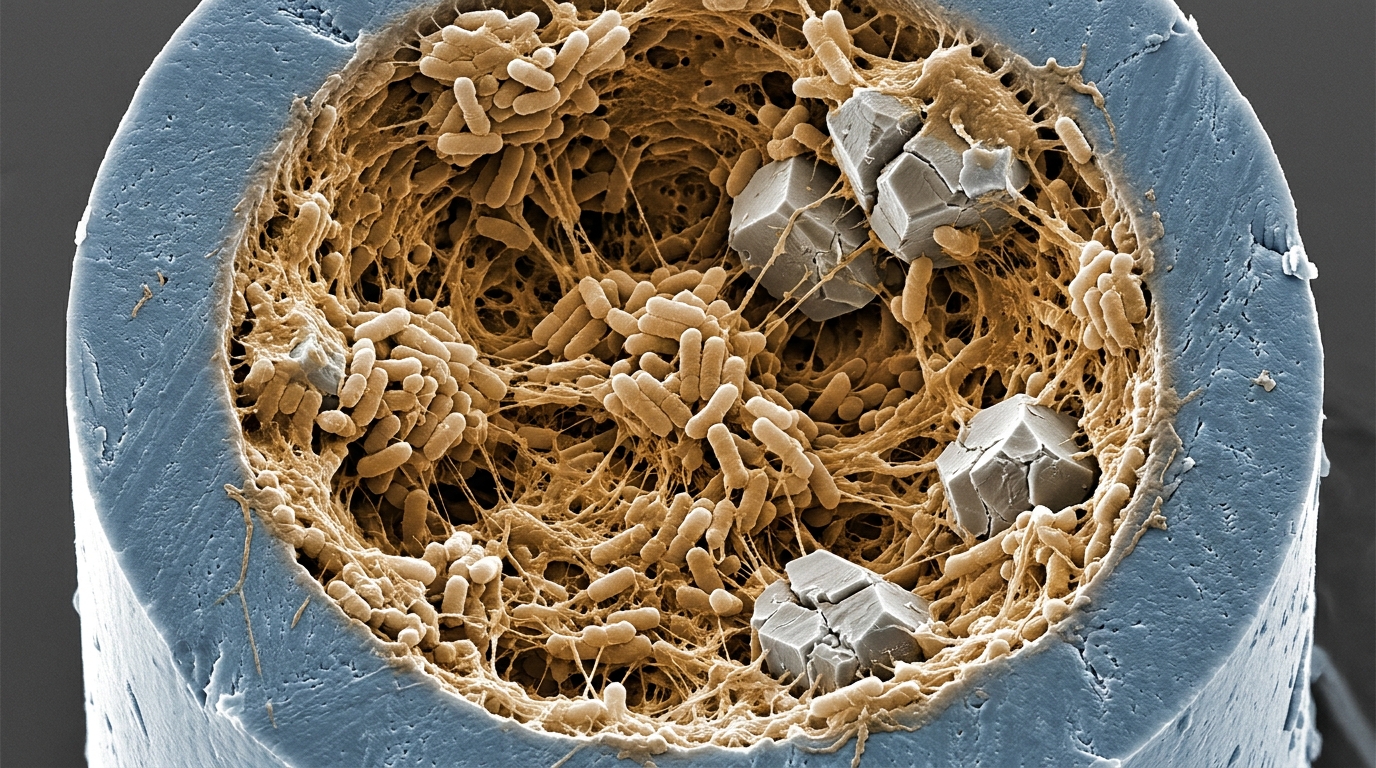
Biofilm Time Machine
How a biofilm forms – and where a coating comes in.
Drag the slider from 0 to 72 hours. Left: biofilm on untreated silicone. Right: the development goal of Z-Chitosan, disrupting early attachment.
What am I looking at?
A surface acts where cells touch it, in stages 1 and 2. Only testing in the project will show whether and how Z-Chitosan affects these stages in a product. Model illustration with a simplified time axis. The real course depends on organism, surface and nutrients.
Incorporation
How Z-Chitosan gets onto the catheter.
The incorporation route is a coating. Which surfaces (outer, lumen or both) and which process are used is agreed with the manufacturer.
Shaft
- Material
- Silicone
- Typical value
- Outer diameter 12 Fr = 4.0 mm, 14 Fr = 4.7 mm, 16 Fr = 5.3 mm (1 Fr = 1/3 mm), wall around 1 mm
- Function
- flexible body
- Z-Chitosan
- outer surface
- Testing
- ISO 20696
Drainage lumen
- Material
- inner surface of the shaft
- Typical value
- manufacturer-specific
- Function
- drains urine
- Z-Chitosan
- inner coating subject to feasibility
- Testing
- ISO 20696
Inflation channel
- Material
- Silicone
- Typical value
- under 1 mm diameter
- Function
- inflates the balloon
- Z-Chitosan
- not intended
- Testing
- ISO 20696
Balloon
- Material
- thin-walled silicone
- Typical value
- 5–10 ml fill (adults)
- Function
- holds the catheter in place
- Z-Chitosan
- outer surface possible
- Testing
- ISO 20696
Coating
- Material
- Z-Chitosan coating, build-up per product
- Typical value
- layer thickness per product, set in the project
- Function
- antimicrobial surface
- Z-Chitosan
- here
- Testing
- ISO 22196, ISO 10993-5
Loading model …
Layers
Size
Click a layer or tap it in the scene. Origin and allergy information are on the Origin page.
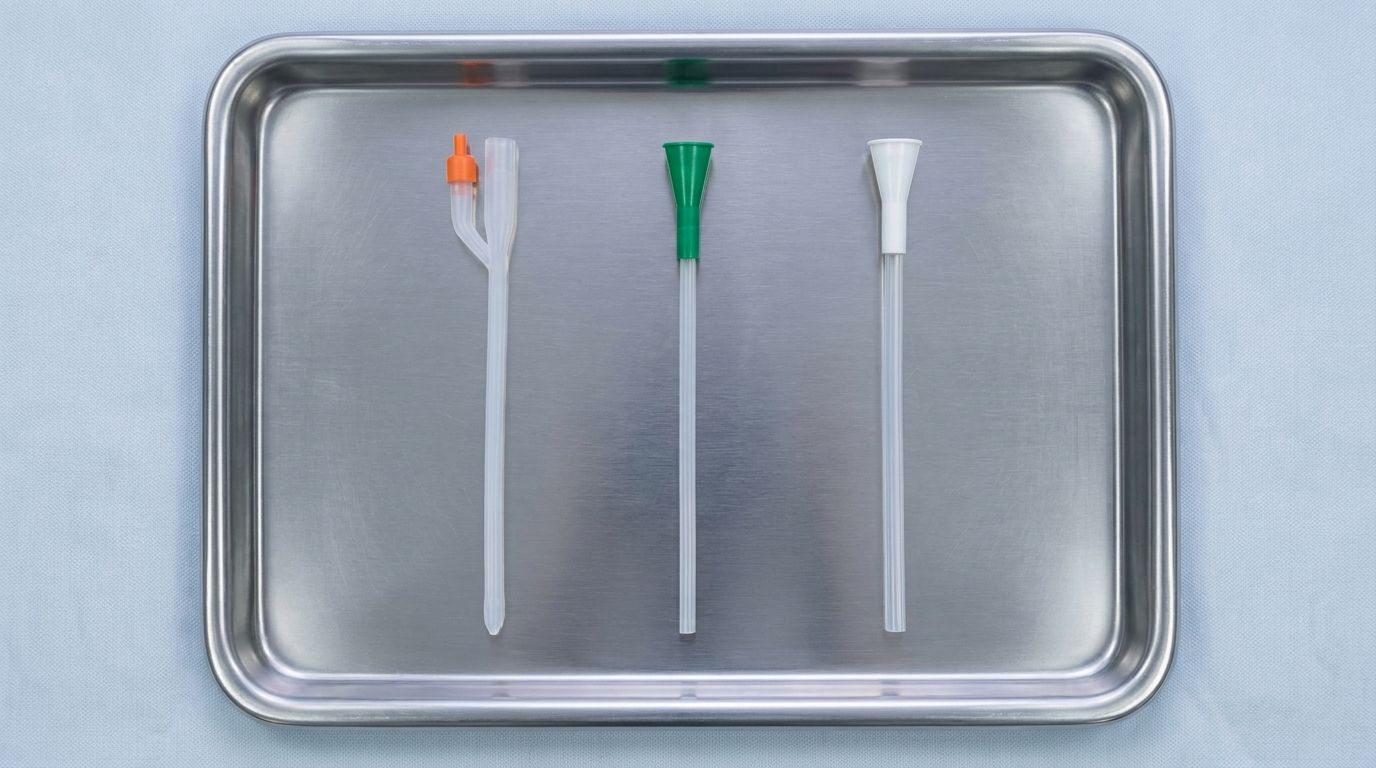
Examples of products that can be coated
- Urinary catheters (Foley, intermittent, Nelaton)
- Ureteral stents
- Drains
- Tubes and airway products
- Wound dressings
- Implant surfaces
Testing
Testing and classification.
Which tests a product with Z-Chitosan needs depends on the material, the use and the intended claim; we define them together in the project. To protect our intellectual property, selected supporting test data may be made available to potential partners on request, subject to review and a non-disclosure agreement.
Regulatory framework
A coated catheter is a medical device under Regulation (EU) 2017/745 (MDR). Its class depends on the product; under Annex VIII, Rule 14 or 18, an antimicrobial coating can trigger class III. Whether Rule 18 applies depends on the raw material source of the chitosan; this is for the manufacturer and notified body to clarify.6
- Iunder 60 minutes
- IIaup to 30 days
- IIbover 30 days
- IIIpossible due to the coating (Rule 14 or 18)
ISO 10993-1 (biological evaluation within risk management), incl. ISO 10993-5 (cytotoxicity)7
Classification, not legal advice. As of 26 September 2026
Regulatory detailsFor your records
Partner fact sheet
- Problem
- Biofilm and encrustation on urinary catheters; catheter-associated urinary tract infections (CAUTI)
- Materials
- Silicone as reference; polyurethane and other medical polymers subject to testing
- Incorporation
- Coating of the outer surface; lumen subject to feasibility
- Test data
- selected test data on request, subject to review and NDA
- Regulatory framework
- MDR (EU) 2017/745, class per Annex VIII depending on the product; ISO 10993-1; ISO 20696
- Partnering
- Licence · joint development with manufacturers
- Status
- Partners wanted
- Contact person
- Hadi Sultani, Managing Director · +49 176 84362604
FAQ
What manufacturers ask.
Your question isn’t here? Ask the assistant or the team.
Which catheter materials are suitable for a Z-Chitosan coating?
The reference material is medical-grade silicone. Polyurethane (e.g. for ureteral stents) and other medical polymers are assessed per project. What matters is layer adhesion, behaviour during sterilisation and whether the outer surface, the lumen or both are coated.
Which MDR class applies to a catheter with an antimicrobial coating?
It depends on the product. For urinary catheters, MDR Annex VIII, Rule 5, sets the basic class by duration of use: I under 60 minutes, IIa up to 30 days, IIb beyond. The coating can trigger class III under Rule 14 (medicinal substance) or Rule 18 (derivatives of animal origin). The manufacturer sets the class and agrees it with the notified body.
Which tests does a catheter coating need?
Three groups: biological evaluation to ISO 10993-1, such as cytotoxicity to ISO 10993-5; antimicrobial performance on test specimens and in biofilm models; and product testing to ISO 20696. The clinical evaluation under the MDR comes on top. Which data ZCP contributes is agreed in the project.
Sources7
- Hooton T. M. et al. (2010): Diagnosis, prevention, and treatment of catheter-associated urinary tract infection in adults: 2009 International Clinical Practice Guidelines from the Infectious Diseases Society of America. Clinical Infectious Diseases 50(5):625–663.
- Stickler D. J. (2008): Bacterial biofilms in patients with indwelling urinary catheters. Nature Clinical Practice Urology 5(11):598–608.
- European Centre for Disease Prevention and Control (2024): Point prevalence survey of healthcare-associated infections and antimicrobial use in European acute care hospitals, 2022–2023. Stockholm: ECDC; press release of 6 May 2024.
- Stoodley P., Sauer K., Davies D. G., Costerton J. W. (2002): Biofilms as complex differentiated communities. Annual Review of Microbiology 56:187–209.
- Sauer K. et al. (2022): The biofilm life cycle: expanding the conceptual model of biofilm formation. Nature Reviews Microbiology 20:608–620.
- Regulation (EU) 2017/745 on medical devices (MDR), Annex VIII, Chapter I (duration of use) and Chapter III, Rules 5, 14 and 18; MDCG 2021-24, Guidance on classification of medical devices.
- ISO 10993-1 and ISO 10993-5 (Biological evaluation of medical devices); ISO 20696 (Sterile urethral catheters for single use); ISO 22196 (Measurement of antibacterial activity on plastics and other non-porous surfaces).
Is Z-Chitosan a fit for your catheter?
The feasibility check is pre-set for medical technology. Or talk to the team directly.