
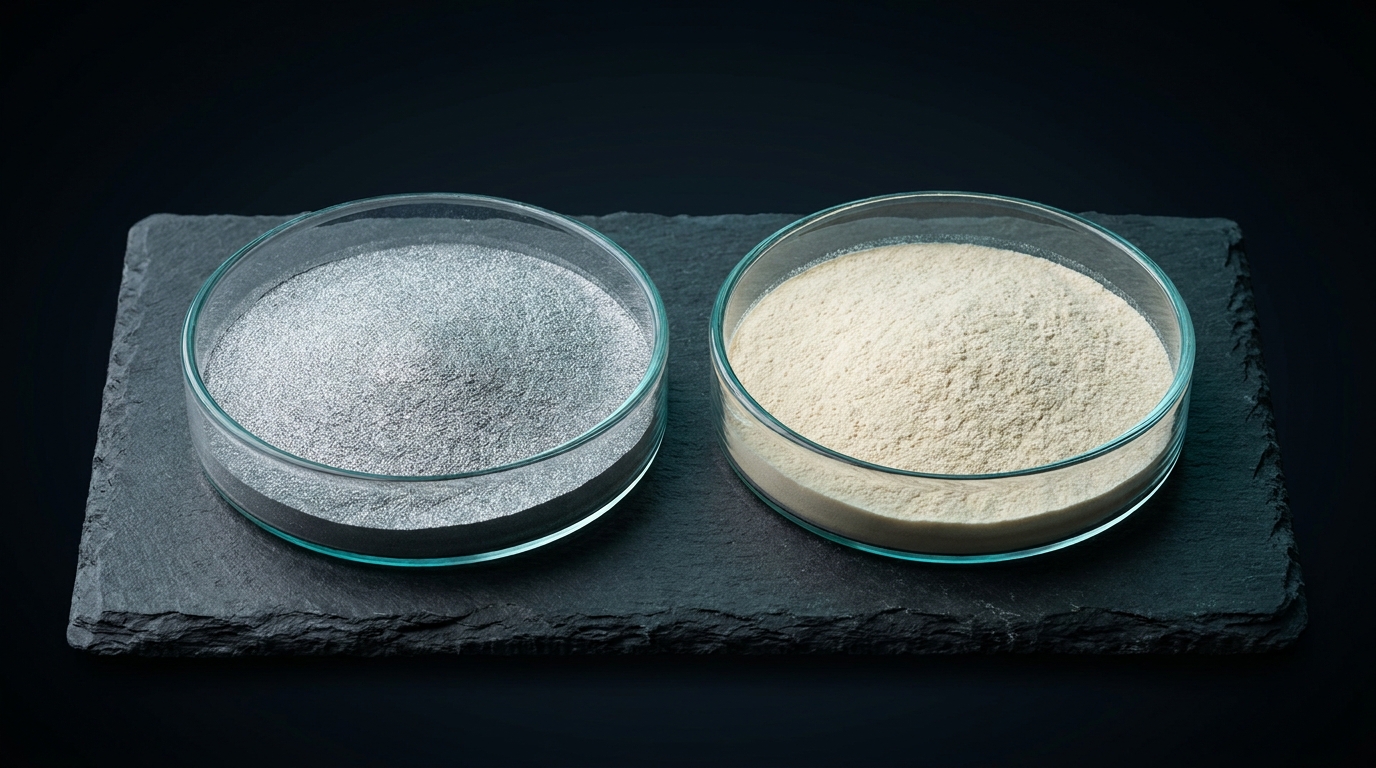
Why manufacturers look at alternatives.
Silver acts mainly through released silver ions, which bind to the proteins, membranes and nucleic acids of microorganisms [1]. It is widely used in wound dressings, catheters, textiles and plastics. Since 1 May 2026, silver has carried a harmonised classification as Repr. 2 (H361f: suspected of damaging fertility) [5].
The Biocidal Products Regulation (BPR) assesses each silver substance separately and per product-type [2]. Silver zinc zeolite has been approved for product-types 2, 7 and 9 since 1 March 2026, with restrictions on treated articles in skin contact [3]. Silver zeolite was not approved for product-type 4 [4], nor was silver sodium hydrogen zirconium phosphate for product-types 2 and 7 [21].
A treated article may only contain active substances that are approved for the relevant product-type or listed in Annex I; transitional rules apply to substances still under review (Articles 58(2) and 94) [2]. This check per substance is a common reason to compare alternatives.
Literature
Technology Landscape: seven classes compared.
The landscape maps technology classes, not brands. Silver appears in the first row as the point of reference. Filter by release behaviour or application; each card cites the literature.
The landscape maps technology classes, not brands. Silver appears in the first row as the point of reference. Filter by release behaviour or application; each card cites the literature.
Regulatory status as of 26 September 2026; not legal advice. Status applies per active substance and product-type, not to a whole class.
leaching
Silver ions
Released silver ions (Ag⁺) bind to the proteins, membranes and nucleic acids of microorganisms. Silver nanoparticles and metallic silver also act by releasing ions.
- Wound dressings
- Catheters
- Textiles
- Plastics
Assessed per silver substance and product-type under the BPR. Silver zinc zeolite approved for PT 2, 7 and 9 (since 1 March 2026), with restrictions on treated articles in skin contact. Silver zeolite not approved for PT 4; silver sodium hydrogen zirconium phosphate not approved for PT 2 and 7. Silver classified Repr. 2 (H361f) since 1 May 2026.
mixed
Copper
Copper ions and direct contact with metallic copper damage the cell membrane and DNA and cause oxidative stress (contact killing). Under laboratory conditions, killing rates of at least 7 to 8 log per hour have been reported.
- Handles and fittings
- Handrails
- Taps
- Coatings
Copper(II) oxide approved as a wood preservative (PT 8), expiry postponed to 31 July 2029. Registered by the US EPA as the first solid antimicrobial material.
mixed
Zinc compounds
Released Zn²⁺ ions and reactive oxygen species at the particle surface, for example with zinc oxide, damage the membrane and cell components.
- Plastics
- Textiles
- Coatings
Check the status per compound and product-type. Zinc pyrithione has been banned in cosmetic products since 1 March 2022 (classified as toxic for reproduction cat. 1B).
mixed
Quaternary ammonium compounds (QACs)
Cationic surfactants adsorb to the negatively charged cell envelope and disrupt the cell membrane.
- Disinfectants
- Surface treatments
- Textiles
Status per substance and product-type. Example: DDAC approved for PT 3 and 4 (1 November 2022 to 31 October 2032). Toxicological aspects and resistance questions are discussed in the literature.
non-leaching
Photocatalytic surfaces (TiO₂)
Under UV-A light, reactive oxygen species form at the titanium dioxide surface and oxidise the cell envelope and cell components. No effect without light of a suitable wavelength.
- Glass
- Ceramics
- Façades
- Coatings
The harmonised classification of TiO₂ powder as carcinogen cat. 2 (inhalation) was annulled by the General Court; the Court of Justice upheld this on 1 August 2025. Antibacterial testing of photocatalytic materials to ISO 27447.
mixed
Cationic polymers
Positively charged polymer chains, such as polyhexamethylene biguanide (PHMB), adsorb to the negatively charged cell envelope and disrupt the membrane. Usable dissolved or grafted onto surfaces.
- Antiseptics
- Textiles
- Surfaces
Status per substance and product-type. Example: PHMB (1415; 4.7) approved for PT 2 and 4.
mixed
Chitosan-based systems
Amino groups protonated under acidic conditions (–NH₃⁺) adsorb to negatively charged cell surfaces (LPS in Gram-negative, teichoic acids in Gram-positive bacteria) and disrupt the membrane; further mechanisms include chelation and barrier effects. Strongly pH-dependent: poorly soluble and less active at neutral pH.
- Wound dressings
- Packaging
- Textiles
- Coatings
If a biocidal property is claimed, the BPR applies; check the status of the specific active substance per product-type. In plant protection, chitosan is approved as a basic substance (Regulation (EU) 2022/456). Usually derived from crustacean shells: allergen note.
Literature Regulatory status as of 26 September 2026; not legal advice. Status applies per active substance and product-type, not to a whole class.
As a table
| Class | Mode of action | Release | Typical applications | Regulatory note (EU) | Literature |
|---|---|---|---|---|---|
| Silver ions | Ag⁺ binds to proteins, membranes and nucleic acids | leaching | wound dressings, catheters, textiles, plastics | assessed per silver substance; silver zinc zeolite approved for PT 2, 7, 9, silver zeolite not for PT 4; silver classified Repr. 2 since 1 May 2026 | [1, 3, 4, 5] |
| Copper | copper ions and contact with metallic copper damage the membrane and DNA | mixed | handles, fittings, handrails, coatings | copper(II) oxide approved for PT 8, expiry extended to 31 July 2029; registered in the USA as the first solid antimicrobial material | [6, 7] |
| Zinc compounds | Zn²⁺ ions and reactive oxygen species at particle surfaces, e.g. zinc oxide | mixed | plastics, textiles, coatings | zinc pyrithione banned in cosmetics since 1 March 2022 (toxic for reproduction 1B) | [8, 9] |
| Quaternary ammonium compounds | cationic surfactants disrupt the cell membrane | mixed: leaching when dissolved, non-leaching when polymer- or silane-bound | disinfectants, surface treatments, textiles | DDAC approved for PT 3 and 4; resistance questions under discussion | [10, 11] |
| Photocatalytic surfaces (TiO₂) | under UV-A light, reactive oxygen species form at the surface; no effect without light | non-leaching | glass, ceramics, façades, coatings | classification of TiO₂ powder as carcinogen cat. 2 (inhalation) finally annulled by the CJEU in 2025; testing to ISO 27447 | [12, 13, 14] |
| Cationic polymers | positively charged chains such as PHMB adsorb and disrupt the membrane | mixed: dissolved or grafted | antiseptics, textiles, surfaces | PHMB (1415; 4.7) approved for PT 2 and 4 | [15, 16] |
| Chitosan-based systems | protonated chitosan adsorbs to negatively charged cell surfaces and disrupts the membrane; strongly pH-dependent | mixed, depending on how it is incorporated | wound dressings, packaging, textiles, coatings | biocidal claims fall under the BPR; approved as a basic substance in plant protection; usually derived from crustacean shells: allergen note | [17, 18, 19] |
How to read the landscape.
- Leaching means the active substance leaves the material. Non-leaching means it stays in or on the material. Mixed means it depends on the form and how it is incorporated.
- Regulatory information applies per active substance and product-type, not to a whole class.
- The literature describes modes of action. Whether a technology works in your material is only shown by testing to a suitable standard.
- The landscape deliberately does not compare potency. Laboratory values depend on the standard, organism and conditions and can hardly be compared across studies.
- Some products combine classes, such as zinc and silver compounds. The status of each individual active substance then applies.
Where Z-Chitosan fits.
Z-Chitosan belongs to the class of chitosan-based systems. Z-Chitosan is an inclusion complex of chitosan and at least one plant extract, formed in the presence of a catalyst (US 11,708,424). It is produced by multi-stage emulsion cross-linking and dried to a powder; as a masterbatch it goes into plastics, polymers and fabrics (US 12,071,490).
Pure chitosan dissolves well and carries a positive charge only under acidic conditions; at neutral pH its activity is weaker [17, 18]. The combination of chitosan with plant extracts is described in US patent 11,708,424 B1 [20]. Whether components are released from the material is tested for each material.
The Origin & botanical actives page covers origin and the allergy note.
Six checkpoints for your selection.
01
Define material and processing
polymer, temperature window, process such as extrusion, injection moulding, coating or textile finishing.
02
Decide where it should act
on the surface only or in the surroundings as well.
03
Plan the evidence
target organisms, standard and conditions that resemble the application.
04
Check the active substance status
approved or under review for the product-type, and with which conditions.
05
Check compatibility with the formulation
test pigments, fillers, additives and the cleaning agents used in service for interactions.
06
Clarify labelling
anyone claiming a biocidal property must label the treated article under Article 58(3) [2].
For your product
What this means for your product.
If you want to make a plastic part or masterbatch antimicrobial without silver, first filter the classes by processing temperature, site of action and active substance status. ZCP works with manufacturers to check whether Z-Chitosan suits the polymer and process in question. The temperature window is clarified per polymer in the project.