
Application · Hygiene products · for manufacturers
Z-Chitosan for hygiene product manufacturers.
ZCP supplies Z-Chitosan as an active ingredient or finish for nonwovens, wet wipes and personal care products and provides support with testing and classification.
For manufacturers of diapers, pads, wet wipes and deodorants: which layer Z-Chitosan can sit in, how it is incorporated and which classification follows.
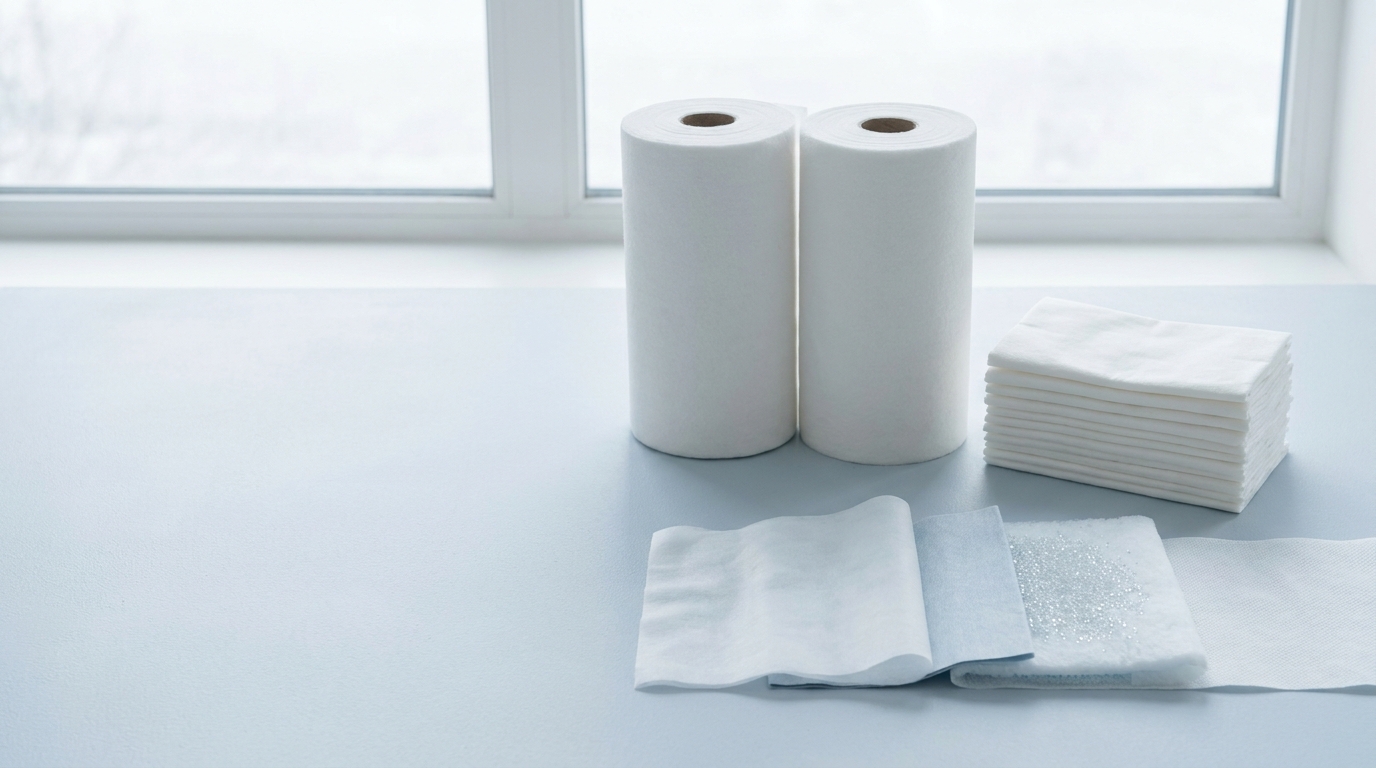
- Problem
- Microbial spoilage of water-based products with few permitted preservatives
- Material
- PP, viscose and polyester nonwovens · Lotions · Deodorant formulations
- Incorporation
- Nonwoven finish · Masterbatch in PP spunbond · Ingredient in formulations
- Test data
- selected test data on request, subject to review and NDA
The problem
Little room for manoeuvre on preservation and odour.
The role Z-Chitosan may play depends on how the end product is classified.
Literature
Annex V
Preservatives in cosmetic products are only permitted if they are listed in Annex V of Regulation (EC) No 1223/2009 (Article 14).
2017
Since 12 February 2017, leave-on products containing methylisothiazolinone, wet wipes included, may no longer be placed on the market (Regulation (EU) 2016/1198).
Odour
Underarm odour forms when skin bacteria convert odourless secretions into volatile odorous molecules; corynebacteria play a central role (James et al. 2013).
Structure
Which layer Z-Chitosan can sit in.
Choose a product. The layers float apart, and the layer intended for Z-Chitosan lights up.
Nonwoven topsheet
- Function
- Sits against the skin and channels liquid inwards.
- Typical material
- PP spunbond.
- Z-Chitosan
- Possible layer for Z-Chitosan (lit).
Distribution layer
- Function
- Takes up liquid quickly and spreads it.
- Typical material
- synthetic-fibre nonwoven.
Absorbent core
- Function
- Stores liquid.
- Typical material
- fluff pulp and superabsorbent.
Backsheet
- Function
- Holds liquid back, lets water vapour through.
- Typical material
- breathable PE film with nonwoven.
Nonwoven
- Function
- Carries the lotion.
- Typical material
- spunlace of viscose and polyester.
- Z-Chitosan
- Possible layer for Z-Chitosan as a finish.
Lotion
- Function
- Water-based, cleanses and cares.
- Z-Chitosan
- Possible layer for Z-Chitosan as an ingredient (lit).
Pack
- Function
- Resealable flow pack that keeps the wipes moist.
Topsheet
- Function
- Sits against the skin.
- Typical material
- PP nonwoven or apertured film.
- Z-Chitosan
- Possible layer for Z-Chitosan (lit).
Distribution layer
- Function
- Spreads liquid across the surface.
Absorbent core
- Function
- Stores liquid.
- Typical material
- fluff pulp, sometimes with superabsorbent.
Backsheet with adhesive strip
- Function
- Holds liquid back and keeps the pad in place.
Loading model …
Product
Layers
Lit layer = possible position of Z-Chitosan; the choice is made in the project.
What am I looking at?
Diaper: Nonwoven topsheet → Distribution layer → Absorbent core → Backsheet
Wet wipe: Nonwoven → Lotion → Pack
Pad: Topsheet → Distribution layer → Absorbent core → Backsheet with adhesive strip
Incorporation
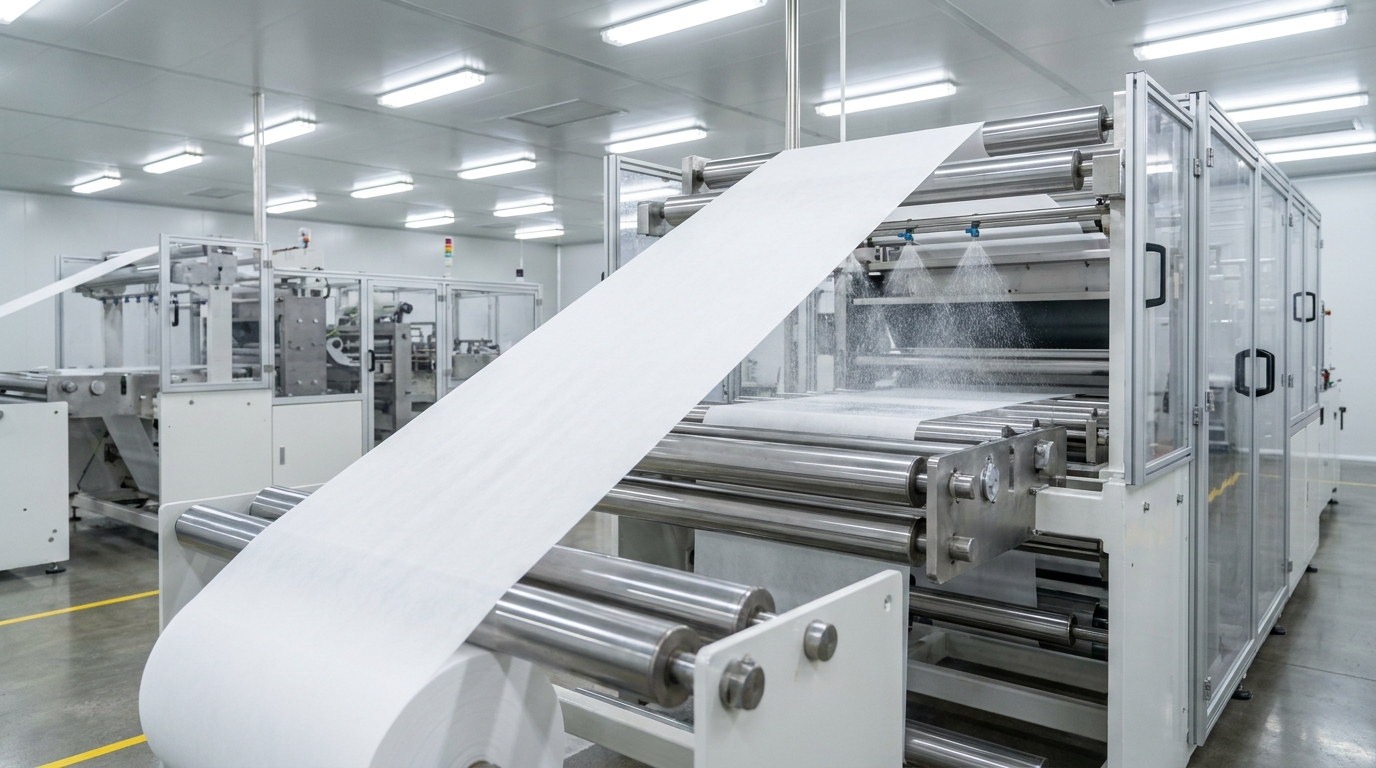
Three routes into hygiene products.
Finish
Applied to the nonwoven by padding or spraying, during production or finishing.
Fibre
Masterbatch in PP spunbond, so Z-Chitosan sits within the fibre.
Formulation
Ingredient in wipe lotions, deodorants and other personal care products.
Fields of use
- Baby diapers
- Sanitary pads and panty liners
- Wet and baby wipes
- Deodorants
Origin and allergy notice are on the Origin & botanical actives page.
View originTesting
Testing and classification.
Which tests a product with Z-Chitosan needs depends on the material, the use and the intended claim; we define them together in the project. To protect our intellectual property, selected supporting test data may be made available to potential partners on request, subject to review and a non-disclosure agreement.
Regulatory framework
The main purpose of the end product decides.
| Wet wipe for cleansing skin, deodorant | cosmetic (Regulation (EC) No 1223/2009) |
|---|---|
| Wipe mainly for skin disinfection | biocidal product, product-type 1 (Regulation (EU) No 528/2012) |
| Wipe for surface disinfection | biocidal product, product-type 2, or 4 in food areas |
| Diaper, pad, liner | article; a treated article if an antimicrobial property is claimed (Art. 58 BPR); incontinence products are sometimes medical devices (Regulation (EU) 2017/745) |
| Preservation in cosmetics | only with substances listed in Annex V |
Status of Z-Chitosan under the Biocidal Products Regulation: clarified for each product type before a project starts
Classification without warranty · not legal advice · as of 26 September 2026
Classification, not legal advice. As of 26 September 2026
For your records
Partner fact sheet
- Problem
- Microbial spoilage of water-based products with few permitted preservatives; odour caused by microorganisms
- Materials
- PP, viscose and polyester nonwovens · Lotions · Deodorant formulations
- Incorporation
- Nonwoven finish · Masterbatch in PP spunbond · Ingredient in formulations
- Test data
- selected test data on request, subject to review and NDA
- Regulatory framework
- Regulation (EC) No 1223/2009 · Regulation (EU) No 528/2012 incl. Art. 58 · Regulation (EU) 2017/745
- Partnering
- Supply · Joint development · Support with testing and classification
- Status
- Partners wanted
- Contact person
- Hadi Sultani, Managing Director · +49 176 84362604
FAQ
What manufacturers ask.
Your question isn’t here? Ask the assistant or the team.
Can Z-Chitosan be used in wet wipes?
There are two routes: as a finish on the nonwoven or as an ingredient in the lotion. Which fits depends on the formulation, the nonwoven and the purpose of the wipe. A skin-cleansing wipe is a cosmetic, where only Annex V substances may act as preservatives. We assess feasibility per formulation.
Is a product with Z-Chitosan a cosmetic or a biocide?
The main purpose of the end product decides. If it mainly serves cleansing, care or body odour, it is a cosmetic under Regulation (EC) No 1223/2009. If its main purpose is disinfection, it is a biocidal product. Diapers and pads are articles; with a claimed antimicrobial property, they count as treated articles.
Is there data on skin compatibility?
Skin compatibility is assessed for the specific end product. For cosmetic products, Article 10 of Regulation (EC) No 1223/2009 requires a safety assessment with data on every ingredient. Which tests ZCP provides for this is agreed in the project. This also covers the allergy question; information on the raw material source of Z-Chitosan is available on request.
Sources4
- Regulation (EC) No 1223/2009 on cosmetic products, Art. 2, 10, 14 and Annex V.
- Commission Regulation (EU) 2016/1198 of 22 July 2016 (methylisothiazolinone in leave-on products including wet wipes; applicable from 12 February 2017).
- James A. G., Austin C. J., Cox D. S., Taylor D., Calvert R. (2013): Microbiological and biochemical origins of human axillary odour. FEMS Microbiology Ecology 83(3):527–540.
- Regulation (EU) No 528/2012, Art. 58 and Annex V (product-types 1, 2, 4) · Regulation (EU) 2017/745 · ISO 20743 · ISO 11930 · ISO 10993-5.
Does Z-Chitosan suit your hygiene product?
Tell us the product, material and target market for a preliminary view on incorporation and classification.