
Application · Textiles
Chitosan-based antimicrobial textile finish.
ZCP, based in Dresden, works with textile finishers and yarn manufacturers to develop Z-Chitosan finishes for performance, medical and home textiles.
- Problem
- Bacterial odour in performance textiles
- Material
- Polyester, cotton and blends
- Incorporation
- Finish on yarn or fabric, e.g. by padding
- Test data
- selected test data on request, subject to review and NDA
The problem
Odour, hospital hygiene, wash durability.
Literature
Odour
In a study with 26 participants, polyester shirts smelled considerably stronger than cotton shirts after exercise. Micrococci, which convert sweat components into volatile odour compounds, grew mainly on polyester. [1]
Clinic
Healthcare workers' apparel is frequently contaminated with pathogens. Textiles are considered an understudied route of transmission. [2]
up to 45%
Across nine silver-treated textiles, between less than 1% and 45% of the silver was lost during washing. Oxidising agents in the detergent increased the release. [3]
Wash-cycle counter
What remains after washing.
A fabric swatch runs through 0, 10, 25 and 50 washes. After each stage, antibacterial activity can be tested to ISO 20743.
0washes
Wash cycles
Washing process
Fibre
The steps are test points, not a durability promise.
What am I looking at?
A fabric swatch runs through 0, 10, 25 and 50 washes. After each stage, antibacterial activity can be tested to ISO 20743. The steps are test points, not a durability promise.
From shirt to fibre.
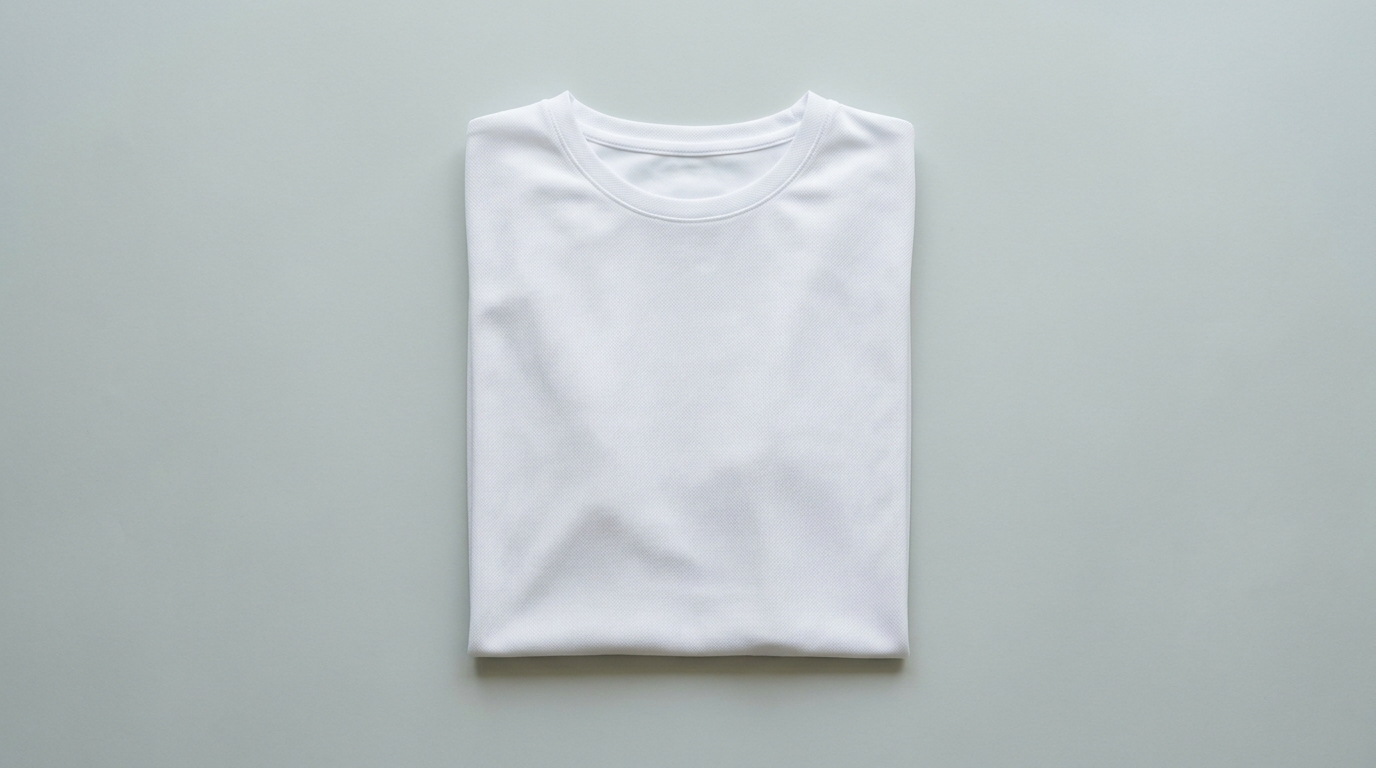
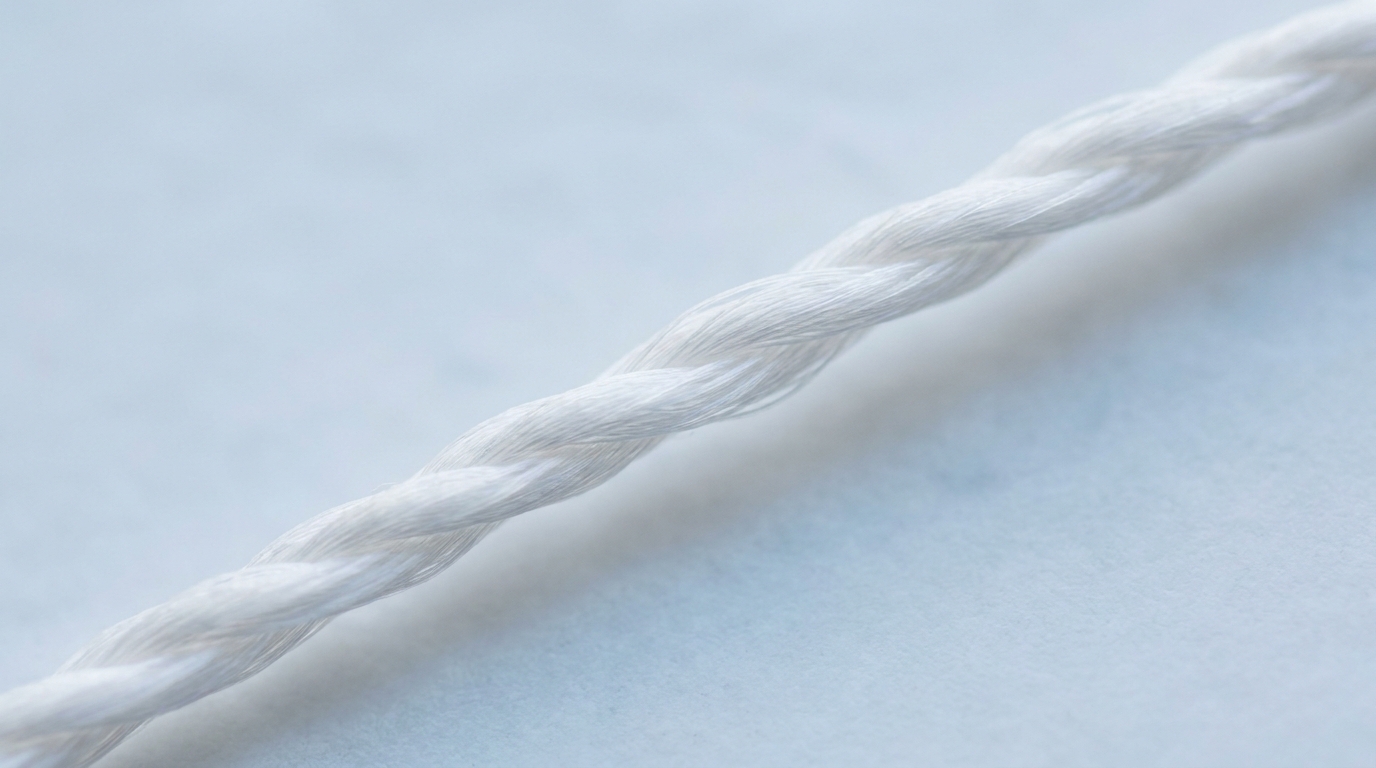
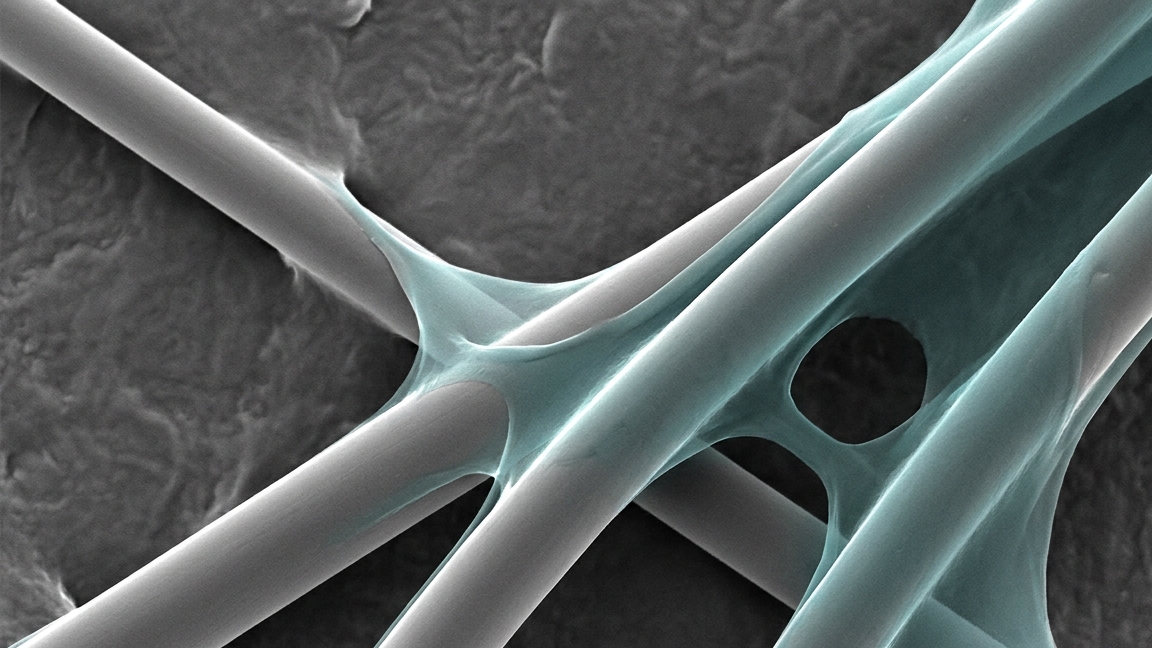
10 cm
Polyester performance shirt
The product that is worn and washed.
What am I looking at?
- 10 cm · Polyester performance shirt. The product that is worn and washed.
- 1 mm · Yarn of twisted filaments. This is where the finish penetrates.
- 10 µm · Single fibres with a thin finish film, bridging between fibres in places..
The images are visualisations, not measurements.
Incorporation
How Z-Chitosan gets onto the fibre.
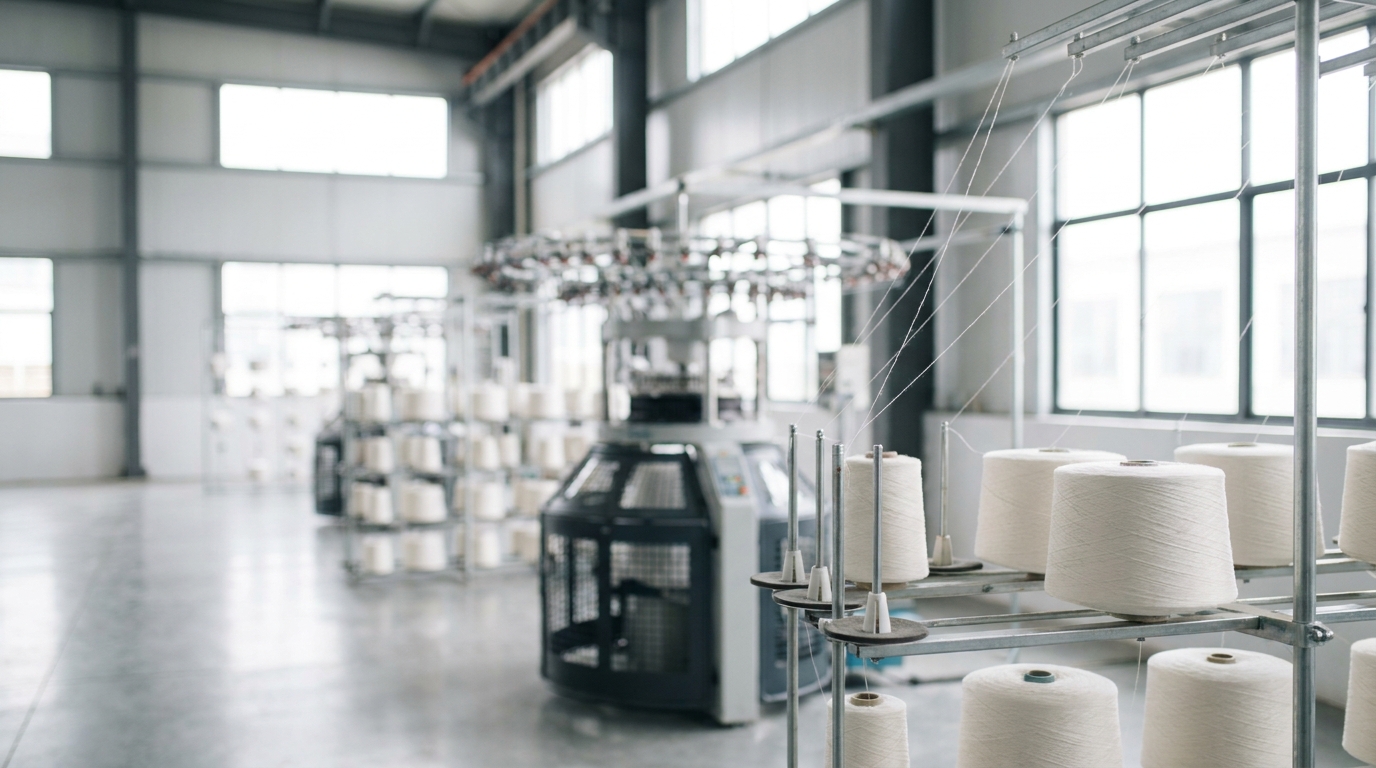
The incorporation route is a finish: Z-Chitosan is applied to yarn or fabric during finishing, for example by padding, and then fixed. For man-made fibres, a masterbatch added during spinning is also assessed case by case.
Fibre
- Material
- polyester or cotton
- Typical value diameter
- 10–20 µm
- Function
- carrier, determines handle and moisture transport
- Z-Chitosan
- not in the fibre core when applied as a finish
- Testing
- –
Finishing film
- Material
- Z-Chitosan finish
- Typical value thickness
- per formulation, set in the project
- Function
- antimicrobial fibre surface
- Z-Chitosan
- here
- Testing
- ISO 20743
Yarn structure
- Material
- twisted filaments or staple fibres
- Typical value yarn diameter
- 0.1–0.3 mm
- Function
- cohesion; this is where washing mechanics act
- Z-Chitosan
- film on the fibres, partly bridging
- Testing
- ISO 6330 / ISO 15797 (laundering before testing)
Loading model …
Layers
Click a layer or tap it in the scene.
What am I looking at?
| Layer | Material | Typical value diameter | Function | Z-Chitosan | Testing |
|---|---|---|---|---|---|
| Fibre | polyester or cotton | 10–20 µm | carrier, determines handle and moisture transport | not in the fibre core when applied as a finish | – |
| Finishing film | Z-Chitosan finish | per formulation, set in the project | antimicrobial fibre surface | here | ISO 20743 |
| Yarn structure | twisted filaments or staple fibres | 0.1–0.3 mm | cohesion; this is where washing mechanics act | film on the fibres, partly bridging | ISO 6330 / ISO 15797 (laundering before testing) |
Fields of use
- Sports and performance wear
- footwear textiles
- hospital linen and workwear
- home textiles
For textiles in contact with skin, please note the allergy information on the Origin page.
Testing
Testing and classification.
Which tests a product with Z-Chitosan needs depends on the material, the use and the intended claim; we define them together in the project. To protect our intellectual property, selected supporting test data may be made available to potential partners on request, subject to review and a non-disclosure agreement.
Regulatory framework
If Z-Chitosan is intended to act as a biocide in the textile, the textile is a treated article under the Biocidal Products Regulation (EU) No 528/2012; if the property is advertised, labelling under Article 58(3) applies. The active substance needs the matching product-type: PT 9 for protecting the fibre, PT 2 for textiles with disinfecting properties. Medical textiles may also fall under the MDR. [4]
- PT 9 · fibre protection
- PT 2 · disinfecting
- MDR where applicable
Status of Z-Chitosan under biocides law: clarified for each product type before a project starts
Classification, not legal advice. As of 26 September 2026
For your records
Partner fact sheet
- Problem
- Bacterial odour in performance textiles; hygiene of hospital linen; wash durability of existing finishes
- Materials
- Polyester, cotton and blends; other fibres subject to testing
- Incorporation
- Finish on yarn or fabric, e.g. by padding; masterbatch during spinning subject to feasibility
- Test data
- selected test data on request, subject to review and NDA
- Regulatory framework
- Biocidal Products Regulation (EU) No 528/2012, Art. 58; PT 9 or PT 2; MDR for medical textiles
- Partnering
- Joint development with finishers and yarn manufacturers · samples
- Status
- Partners wanted
- Contact person
- Hadi Sultani, Managing Director · +49 176 84362604
FAQ
What finishers ask.
Your question isn’t here? Ask the assistant or the team.
How wash-durable is the Z-Chitosan finish?
We test this in the project for each fibre and formulation. Antibacterial activity is tested to ISO 20743 before and after a defined number of washes, using domestic laundering to ISO 6330 or industrial laundering to ISO 15797. The steps 10, 25 and 50 in the wash-cycle counter are test points.
Does the finish work on cotton and polyester?
Both fibres are part of the Material Library. As a cellulose fibre, cotton offers many hydroxyl groups for bonding. Polyester is smoother and more water-repellent and usually needs an adapted fixing step. Which formulation suits which fibre and blend is assessed in the project with your finisher.
Which standard applies to antimicrobial textiles?
Antibacterial activity of textiles is tested to ISO 20743. The standard describes an absorption, a transfer and a printing method; the test organisms are usually Staphylococcus aureus and Klebsiella pneumoniae. The result is the activity value A, a logarithmic difference from the untreated control. For wash durability, samples are laundered beforehand to ISO 6330 or ISO 15797.
Sources4
- Callewaert C., De Maeseneire E., Kerckhof F.-M., Verliefde A., Van de Wiele T., Boon N. (2014): Microbial odor profile of polyester and cotton clothes after a fitness session. Applied and Environmental Microbiology 80(21):6611–6619.
- Mitchell A., Spencer M., Edmiston C. Jr. (2015): Role of healthcare apparel and other healthcare textiles in the transmission of pathogens: a review of the literature. Journal of Hospital Infection 90(4):285–292.
- Geranio L., Heuberger M., Nowack B. (2009): The behavior of silver nanotextiles during washing. Environmental Science & Technology 43(21):8113–8118.
- Regulation (EU) No 528/2012 (Biocidal Products Regulation), Art. 58 and Annex V (product-types 2 and 9); ISO 20743; ISO 6330; ISO 15797.
Which fibre, which process?
The feasibility check is pre-set for textiles. Tell us the fibre, the finishing step and the laundering requirement.