
Application · Paints & coatings
Antimicrobial additives for paints and floor coatings.
ZCP, based in Dresden, provides Z-Chitosan as an additive to manufacturers of wall paints and epoxy floor coatings and supports its incorporation into the formulation.
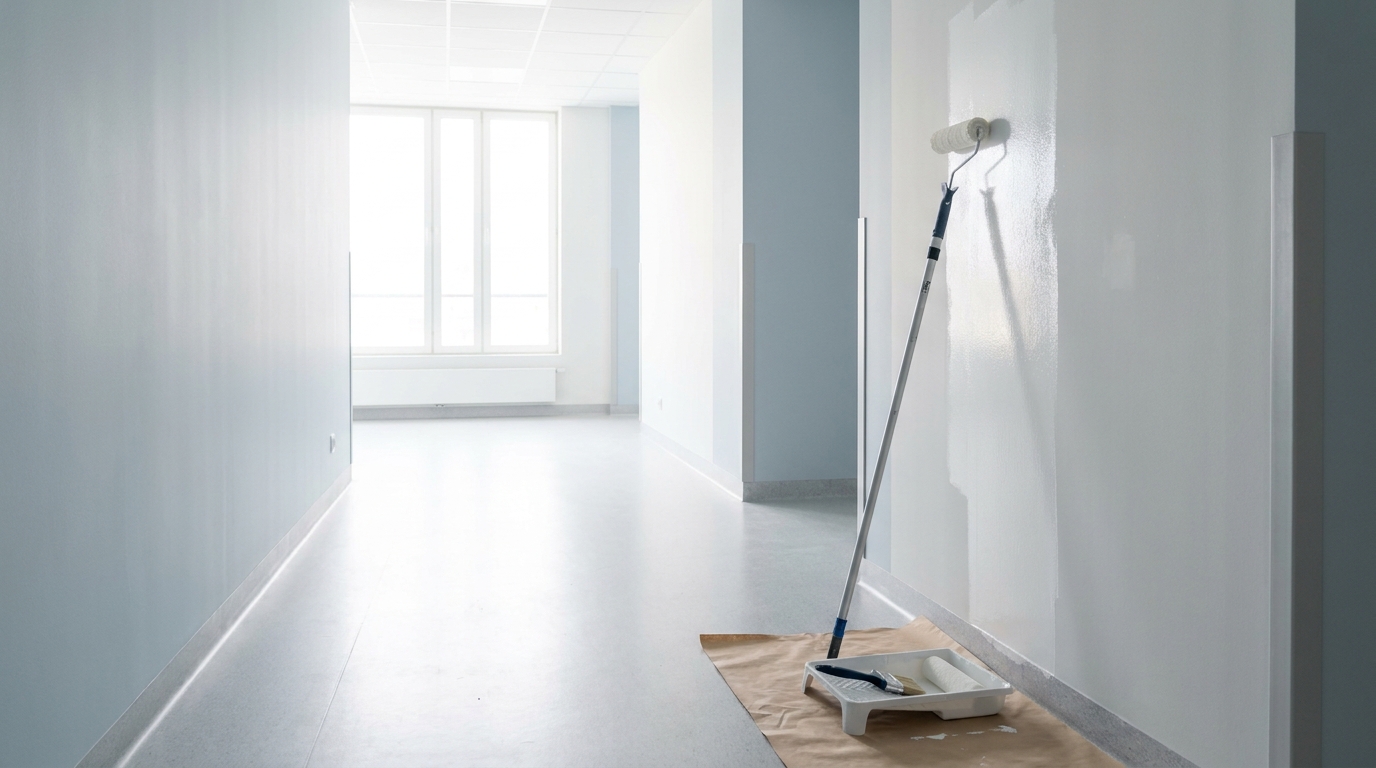
- Problem
- Surfaces in hospitals, cleanrooms and food plants as a reservoir for pathogens
- Material
- Emulsion wall paints, epoxy floor coatings
- Incorporation
- Additive in the formulation
- Test data
- selected test data on request, subject to review and NDA
The problem
Surfaces as a reservoir for pathogens in hospitals.
An antimicrobial coating does not replace cleaning and disinfection. It can complement them if test data support this.
Literature
Months
Common hospital pathogens such as Enterococcus, Staphylococcus aureus, Acinetobacter or Pseudomonas aeruginosa can persist on dry surfaces for months. [1]
Hands
Contaminated surfaces contribute to the transmission of healthcare-associated pathogens. From there, the pathogens are transferred to the hands of staff. [2]
4.3 m
Each year, around 4.3 million patients in EU/EEA hospitals acquire at least one healthcare-associated infection. [3]
Paint cross-section
Drag through the wall.
Move the handle across the wall. The layers of the paint system open up beneath it, and each layer can be clicked.
Substrate
- Material
- plaster, concrete or plasterboard
- Typical value
- millimetres to centimetres
- Function
- load-bearing surface
- Z-Chitosan
- none
- Testing
- –
Primer
- Material
- penetrating or pigmented primer
- Typical value
- 10–40 µm dry
- Function
- consolidates the substrate and improves adhesion
- Z-Chitosan
- none
- Testing
- –
Paint layer with additive
- Material
- emulsion paint with Z-Chitosan
- Typical value
- approx. 50 µm dry per coat
- Function
- hiding power, protection, carrier of the additive
- Z-Chitosan
- dispersed in the film
- Testing
- EN 13300 / ISO 11998 (wet scrub resistance, cleanability)
Surface
- Material
- top zone of the paint film
- Typical value
- top micrometres (model)
- Function
- contact with hands, cleaning and microbes
- Z-Chitosan
- share at the surface
- Testing
- ISO 22196 on the dried film; EN 15457 for protecting the film against fungi
Epoxy floor coating
- Typical value
- 0.3–3 mm depending on the system, from roller-applied to self-levelling
- Z-Chitosan
- in the resin-hardener system
- Testing
- ISO 22196
Surface
Layers
Drag the handle or move it with ← →. Click a layer for details.
What am I looking at?
- Substrate. Material: plaster, concrete or plasterboard · Typical value: millimetres to centimetres · Function: load-bearing surface · Z-Chitosan: none · Testing: –
- Primer. Material: penetrating or pigmented primer · Typical value: 10–40 µm dry · Function: consolidates the substrate and improves adhesion · Z-Chitosan: none · Testing: –
- Paint layer with additive. Material: emulsion paint with Z-Chitosan · Typical value: approx. 50 µm dry per coat · Function: hiding power, protection, carrier of the additive · Z-Chitosan: dispersed in the film · Testing: EN 13300 / ISO 11998 (wet scrub resistance, cleanability)
- Surface. Material: top zone of the paint film · Typical value: top micrometres (model) · Function: contact with hands, cleaning and microbes · Z-Chitosan: share at the surface · Testing: ISO 22196 on the dried film; EN 15457 for protecting the film against fungi
Epoxy floor coating · Typical value: 0.3–3 mm depending on the system, from roller-applied to self-levelling · Z-Chitosan: in the resin-hardener system · Testing: ISO 22196
Incorporation
How Z-Chitosan gets into the paint.
01
Additive
Z-Chitosan in a supply form suited to paints.
02
Incorporation
added during formulation; stage and dosage are agreed with your laboratory.
03
Testing
storage stability, viscosity, colour, wet scrub resistance and antibacterial activity on the film.
04
Production
handover of the formulation and support during scale-up.
Substrate
- Material
- plaster, concrete or plasterboard
- Typical value
- millimetres to centimetres
- Function
- load-bearing surface
- Z-Chitosan
- none
- Testing
- –
Primer
- Material
- penetrating or pigmented primer
- Typical value
- 10–40 µm dry
- Function
- consolidates the substrate and improves adhesion
- Z-Chitosan
- none
- Testing
- –
Paint layer with additive
- Material
- emulsion paint with Z-Chitosan
- Typical value
- approx. 50 µm dry per coat
- Function
- hiding power, protection, carrier of the additive
- Z-Chitosan
- dispersed in the film
- Testing
- EN 13300 / ISO 11998 (wet scrub resistance, cleanability)
Surface
- Material
- top zone of the paint film
- Typical value
- top micrometres (model)
- Function
- contact with hands, cleaning and microbes
- Z-Chitosan
- share at the surface
- Testing
- ISO 22196 on the dried film; EN 15457 for protecting the film against fungi
Loading model …
Layers
Build-up
Click a layer or tap it in the scene.
What am I looking at?
| Layer | Material | Typical value | Function | Z-Chitosan | Testing |
|---|---|---|---|---|---|
| Substrate | plaster, concrete or plasterboard | millimetres to centimetres | load-bearing surface | none | – |
| Primer | penetrating or pigmented primer | 10–40 µm dry | consolidates the substrate and improves adhesion | none | – |
| Paint layer with additive | emulsion paint with Z-Chitosan | approx. 50 µm dry per coat | hiding power, protection, carrier of the additive | dispersed in the film | EN 13300 / ISO 11998 (wet scrub resistance, cleanability) |
| Surface | top zone of the paint film | top micrometres (model) | contact with hands, cleaning and microbes | share at the surface | ISO 22196 on the dried film; EN 15457 for protecting the film against fungi |
Where it is used
- Hospitals and operating theatres
- cleanrooms
- food processing
- schools and public buildings
- epoxy floors in laboratories and industry
Origin and allergy information are on the Origin page.
Testing
Testing and classification.
Which tests a product with Z-Chitosan needs depends on the material, the use and the intended claim; we define them together in the project. To protect our intellectual property, selected supporting test data may be made available to potential partners on request, subject to review and a non-disclosure agreement.
Regulatory framework
If Z-Chitosan is intended to act as a biocide in the paint, the paint is a treated article under the Biocidal Products Regulation (EU) No 528/2012; if it has a primary biocidal function, it is itself a biocidal product. The active substance needs the matching product-type: PT 7 for protecting the film, PT 2 for paints with disinfecting properties. If the property is advertised, labelling under Article 58(3) applies. [4]
- PT 7 · film protection
- PT 2 · disinfecting
- treated article ↔ biocidal product
Status of Z-Chitosan under biocides law: clarified for each product type before a project starts
Classification, not legal advice. As of 26 September 2026
For your records
Partner fact sheet
- Problem
- Surfaces in hospitals, cleanrooms and food plants as a reservoir for pathogens; paints with a hygiene requirement
- Materials
- Emulsion wall paints, epoxy floor coatings; other binder systems subject to testing
- Incorporation
- Additive in the formulation
- Test data
- selected test data on request, subject to review and NDA
- Regulatory framework
- Biocidal Products Regulation (EU) No 528/2012: Art. 3, Art. 58, Annex V (PT 2, PT 7)
- Partnering
- Additive supply with formulation support · joint development
- Status
- Partners wanted
- Contact person
- Hadi Sultani, Managing Director · +49 176 84362604
FAQ
What formulators ask.
Your question isn’t here? Ask the assistant or the team.
How much Z-Chitosan does a wall paint need?
The amount depends on binder, pigment volume concentration and requirements. We determine it with you in a laboratory series: several dosage levels, tested for antibacterial activity to ISO 22196 and for paint properties such as wet scrub resistance, colour and storage stability.
Is Z-Chitosan suitable for epoxy floor coatings?
Epoxy floors are listed in the ZCP catalogue alongside wall paints. What needs testing is compatibility with resin and hardener, the effect on pot life and curing, and the share at the surface after levelling. For floors, what remains at the surface after abrasion and cleaning also matters.
Which test applies to coated surfaces?
For the antibacterial activity of dried coatings, ISO 22196 is usually applied, the standard for plastics and other non-porous surfaces. Tests use E. coli and S. aureus over 24 hours at 35 °C; the result is the value R, a log difference from the untreated sample. For protecting the film against fungal growth, EN 15457 applies.
Sources4
- Kramer A., Schwebke I., Kampf G. (2006): How long do nosocomial pathogens persist on inanimate surfaces? A systematic review. BMC Infectious Diseases 6:130.
- Otter J. A., Yezli S., French G. L. (2011): The role played by contaminated surfaces in the transmission of nosocomial pathogens. Infection Control & Hospital Epidemiology 32(7):687–699.
- European Centre for Disease Prevention and Control (2024): Point prevalence survey of healthcare-associated infections and antimicrobial use in European acute care hospitals, 2022–2023. Stockholm: ECDC; press release of 6 May 2024.
- Regulation (EU) No 528/2012 (Biocidal Products Regulation), Art. 3(1), Art. 58 and Annex V (product-types 2 and 7); ISO 22196; EN 13300; ISO 11998; EN 15457.
Which paint are you formulating?
The feasibility check is pre-set for paints and coatings. Tell us the binder, the place of use and the test objective.