
Technology
Z-Chitosan: chitosan, rethought.
Chitosan and plant extracts, combined into an antimicrobial system for materials – in three stations, based on the patent specifications.
Definition
What Z-Chitosan is.
Z-Chitosan is an inclusion complex of chitosan and at least one plant extract, formed in the presence of a catalyst (US 11,708,424). It is produced by multi-stage emulsion cross-linking and dried to a powder; as a masterbatch it goes into plastics, polymers and fabrics (US 12,071,490). The applications show which forms ZCP offers today.
Chitosan
The carrier, a cationic biopolymer derived from chitin
Plant extracts
Named in the patent, among others: thyme, oregano, cinnamon, clove
Catalyst
Links both components in the emulsion cross-linking
Solution or microparticles
As a powder for incorporation into the material
Model illustration Patent
Molecule Studio
A chitosan chain to rotate and examine.
Chitosan is a chain of D-glucosamine (with a free amino group) and N-acetyl-D-glucosamine. Set DDA and pH and follow the chain’s charge.
Loading molecule …
Drag: rotate · Scroll: zoom · Tap an atom: details
Share of units with a free amino group · 6 / 8 units
Below pH 6.4 most amino groups are protonated (–NH3+).
- Protonated amino groups
- 88.8 %
- Charged units in the chain
- 71.0 % 5 / 8
View
α = 1 / (1 + 10(pH − 6.4)) · charged = DDA × α
What am I looking at?
Chitosan consists of β-(1→4)-linked units of D-glucosamine and N-acetyl-D-glucosamine. The degree of deacetylation (DDA, typically 60–95 %) states how many units carry a free amino group. These amino groups have a pKa of about 6.3 to 6.5. In acidic conditions they take up a proton (–NH3+), so the chain becomes positively charged and soluble. At neutral pH only a small share is charged; plain chitosan is then poorly soluble and less active.
| pH | Protonated share | DDA 60 % | DDA 80 % | DDA 95 % |
|---|---|---|---|---|
| 4.0 | 99.6 % | 59.8 % | 79.7 % | 94.6 % |
| 5.0 | 96.2 % | 57.7 % | 76.9 % | 91.4 % |
| 6.0 | 71.5 % | 42.9 % | 57.2 % | 67.9 % |
| 6.4 | 50.0 % | 30.0 % | 40.0 % | 47.5 % |
| 7.0 | 20.1 % | 12.0 % | 16.1 % | 19.1 % |
| 8.0 | 2.5 % | 1.5 % | 2.0 % | 2.3 % |
Idealised model calculation; the actual pKa depends on DDA and ionic strength, among other factors. · Literature: Rinaudo 2006; Kong et al. 2010
Cell envelope in section
What happens at the cell.
Bacteria and yeasts carry negatively charged components on their surface. Choose an organism and step through the literature-based model.
Organism
Gram-negative: outer membrane, thin peptidoglycan, inner membrane
What am I looking at?
The model shows the cell envelopes of four organisms: E. coli and P. aeruginosa as rods, S. aureus as cocci, C. albicans as a yeast. Gram-negative bacteria have an outer membrane with lipopolysaccharides, Gram-positive bacteria a thick peptidoglycan layer with teichoic acids; both are negatively charged on the outside. The animation shows the literature-based model of chitosan’s action in four steps. It is a model illustration, not a measurement. The effect depends on organism, pH and material.
Incorporation
Four routes into the material.
Z-Chitosan goes into the polymer, onto the surface, onto the fibre or into the liquid. Patent US 12,071,490 describes the route via a masterbatch into plastics, polymers and fabrics; the applications show which other routes ZCP offers. Suitability for your material is assessed case by case.
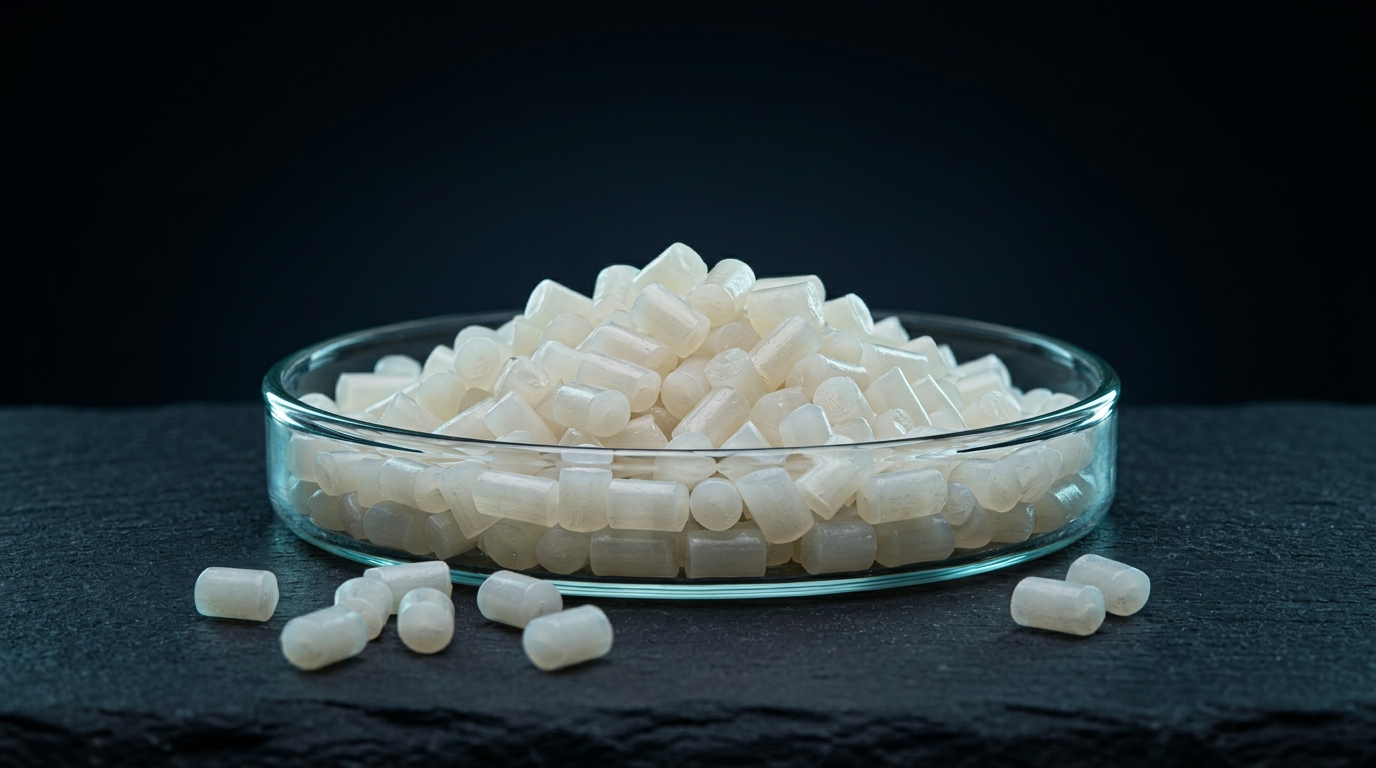
Masterbatch · in the polymer
Z-Chitosan powder is compounded into a carrier polymer and dosed in during injection moulding or extrusion.
Typical materials
- PP
- PE
- PVC
- PET
- PS
- ABS
- PA
- PC
Coating · on the surface
A Z-Chitosan solution is applied to finished parts as a thin film; the base material's formulation stays unchanged.
Typical materials
- Silicone
- Polyurethane
- Filter membranes (RO, UF, NF)
- Plastic surfaces
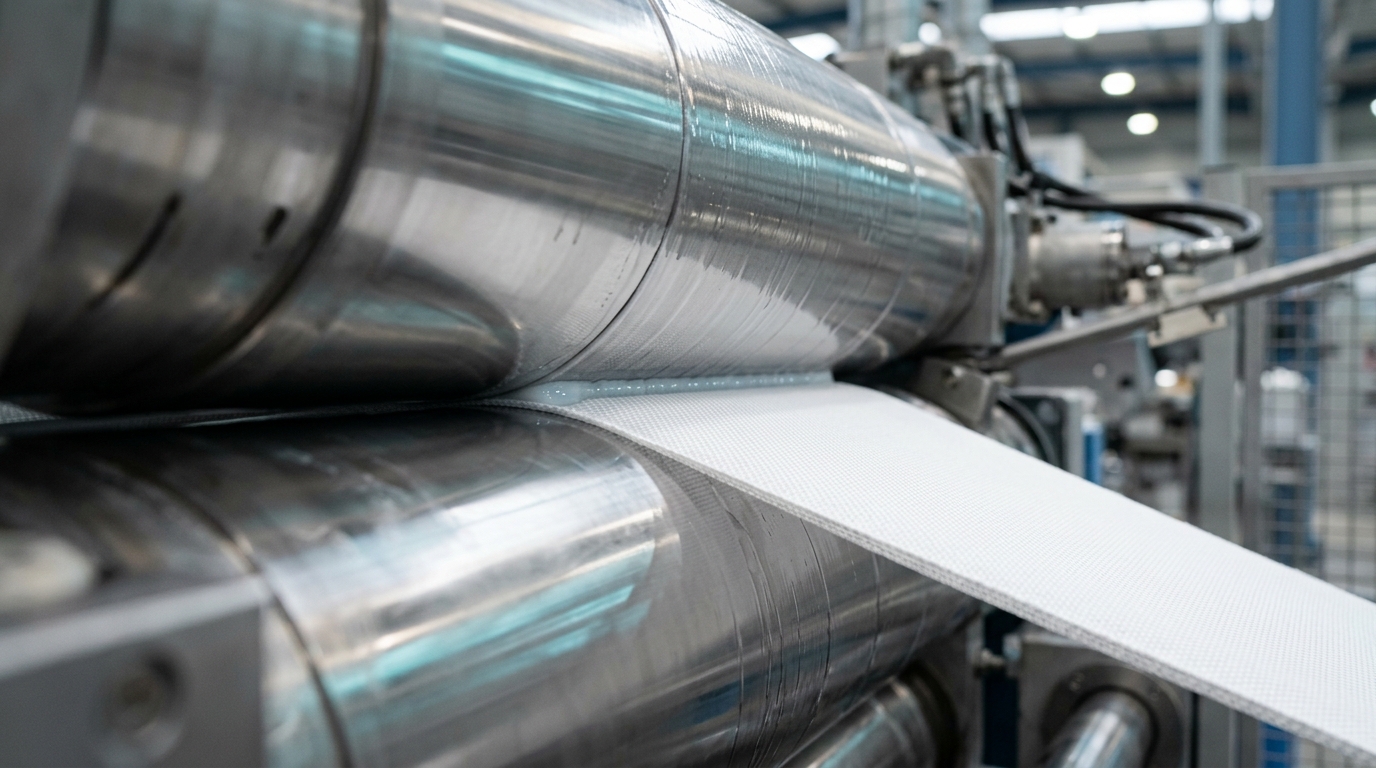
Finish · on the fibre
Textiles are treated with a Z-Chitosan liquor during finishing, for example on a padding mangle.
Typical materials
- Cotton
- polyester
- Blended fabrics
- Nonwovens
Formulation · in the liquid
Z-Chitosan is added to liquid products as a solution or powder, such as wall paints or wet-wipe lotions.
Typical materials
- Wall paints
- Epoxy floor coatings
- Wet-wipe lotions
Evidence
What is evidenced – and where to read further.
Every visual carries a badge. Patents and testing have their own pages.
Sources4
- Rabea E. I., Badawy M. E.-T., Stevens C. V., Smagghe G., Steurbaut W. (2003): Chitosan as antimicrobial agent: applications and mode of action. Biomacromolecules 4(6):1457–1465.
- Kong M., Chen X. G., Xing K., Park H. J. (2010): Antimicrobial properties of chitosan and mode of action: a state of the art review. International Journal of Food Microbiology 144(1):51–63.
- Rinaudo M. (2006): Chitin and chitosan: Properties and applications. Progress in Polymer Science 31(7):603–632.
- US 11,708,424 B1 and US 12,071,490 B2 (Google Patents), see Patents.
Is Z-Chitosan right for your material?
Describe your material, process and goal to receive an initial, non-binding assessment.